
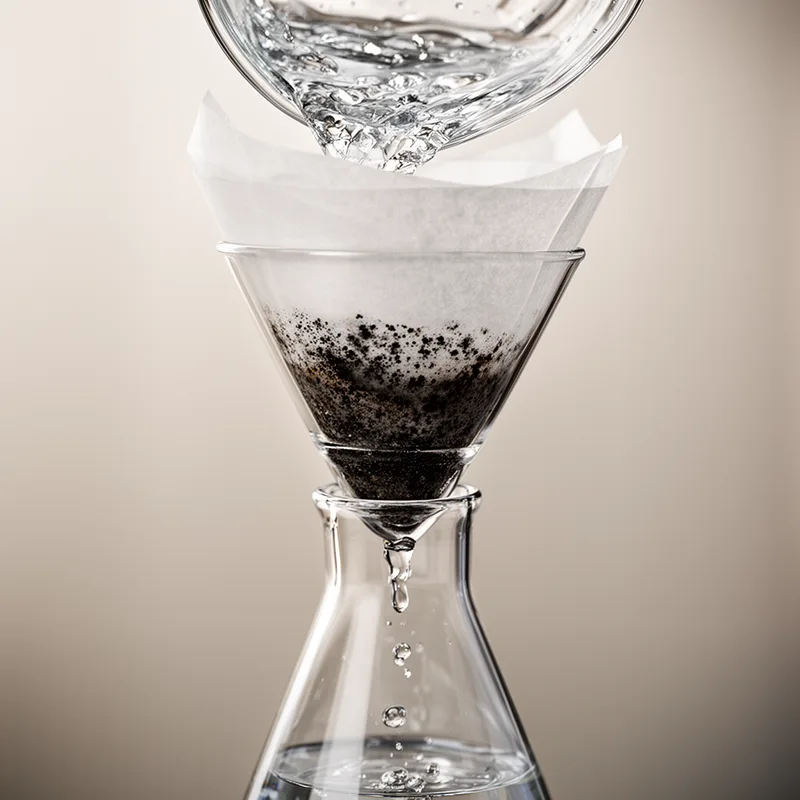
to separate out
 7
3.7
7
3.7

- phrasal verb
- /ˈsɛpəˌreɪt aʊt/
- Specialized
- The impurities are separated out by density differences or variations in their other physical characteristics.
- separate out material
- try to separate out
Loading YouTube…
Watch on YouTubeMaybe you want to separate out drinks from restaurants.
- Maybe you want to separate out drinks from restaurants.
- So you need that huge electron electromagnet to separate out the different atomic masses.
- And I try to be the, the person that separates out all the stuff that works from the stuff that does not work.
- So we have to separate out the noise, the suffering from the pain.
- So some constraints might build in things that try and separate out edges because it tends to break this stuff.
- And so Svorski and, and and others said we should really separate out these two things and stop talking about transitions.
- But let me know if you want me to separate out the Arcs.
- But the next stage of separating out the sexes is what we call gonaddle sex.
- Well, then you'd get the Africans separated out from the Eurasian population.
Examples
-
Later, she separated out the seeds and roasted them on a cookie sheet.
Fiction book (1997) -
The wastewater next moves through a clarifier, which separates out the residual solids.
Academic text (1996) -
Maybe you want to separate out drinks from restaurants.
-
Residents are asked to separate out grass, leaves, and brush.
Academic text (1996) -
So you need that huge electron electromagnet to separate out the different atomic masses.
-
So we're going to kind of dig all of this up and separate out the good stuff and discard the stuff that's not good anymore.
-
The oil is then whirled in a centrifuge to separate out any water.
-
Food-testing laboratories measure fat content by mixing foods with chemicals that separate out the fat.
-
The wastewater next moves through a clarifier, which separates out the residual solids.
Synonyms
 948
1.9
948
1.9
To remove something from a place or container
 297
1.9
297
1.9
To break into parts or pieces
 138
3.0
138
3.0
To pass something through a device that removes unwanted parts
 70
4.1
70
4.1
To get a substance from a plant or material by a special process
 30
4.6
30
4.6
To remove dirt and bad chemicals from water or air to make them clean
 26
3.7
26
3.7
To remove solid bits from a liquid using a filter or sieve
 20
3.8
20
3.8
To remove unwanted things from water, air, or lists by letting the rest pass
 15
6.3
15
6.3
Remove a substance or part from material like soil
 1
9.8
1
9.8
To separate a mixture into parts using a scientific or industrial method
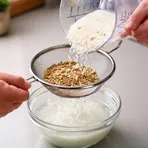

 1
5.3
1
5.3
Remove unwanted bits from food or material by passing them through a screen

To remove solid parts from a liquid or gas using a filter
Antonyms

How Separated
- Specialized
70
4.1
 20
3.8
20
3.8
- Specialized
7
3.7
1
3.7
237
2.0
Surface Forms
Morphology
The meaning 'to remove something from a mixture' is directly derivable from 'separate' (to split into parts) combined with the particle 'out' (away from the interior), so the phrase transparently denotes moving unwanted material out of a mixture. This compositional phrasal-verb pattern is common and predictable, so a B1 learner who knows the constituents would readily infer the intended meaning.
Etymology
Separate out comes from the image of separate, meaning 'to split', and out, meaning 'to move out'. Imagine using a sieve to pull stones out of sand so the sand stays behind. That's why it means 'to remove something from a mixture'.