
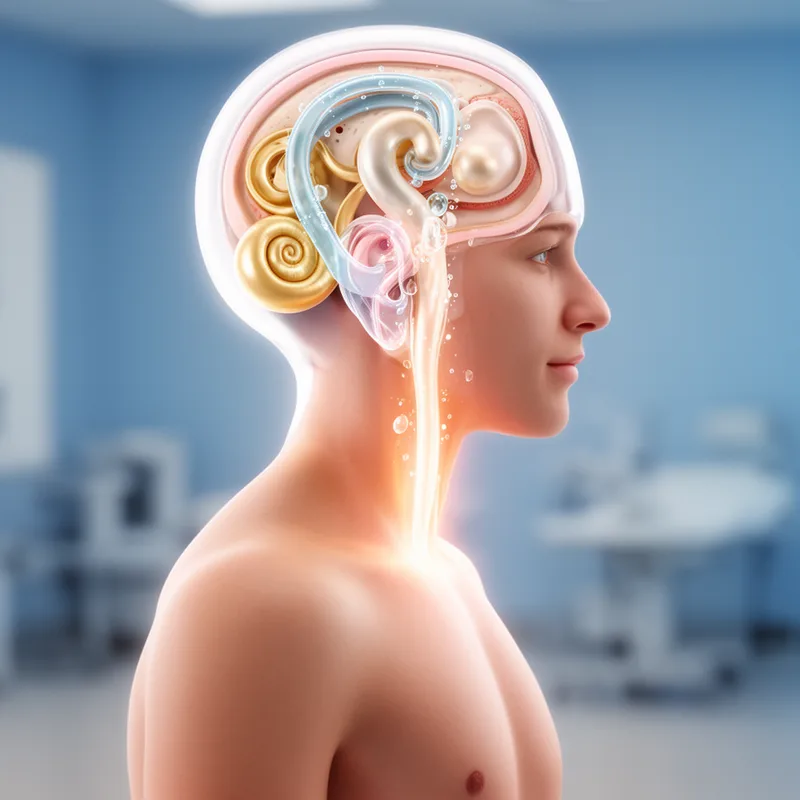
sense of equilibrium
- noun
- /sɛns əv ˌiːkwɪˈlɪbriəm/
- Specialized
- If you lose your sense of equilibrium, you might feel dizzy and unsteady on your feet.
Examples
-
To regain a sense of equilibrium, newly diagnosed families may need to focus their energies on the family unit before they respond to other demands or develop external resources.
Academic text (1993) -
The gymnast's sense of equilibrium allowed her to perform a perfect balance beam routine.
-
To maintain a sense of equilibrium, it's important to practice relaxation techniques regularly.
Synonyms

 7
7.2
7
7.2

The sense of balance in the inner ear that tells you head position and movement
 4
3.4
4
3.4
The ability to keep your body steady so you do not fall


 1
6.3
1
6.3
Parts of the inner ear that help you keep your balance and know your body's position
 1
8.4
1
8.4
Small connected spaces in the inner ear that help a person hear and keep balance
Parts in the inner ear that help keep balance and show where your head is

A sense that tells you where your head is and how it moves from the inner ear

Parts of the inner ear that tell your body about balance and movement
Antonyms

Surface Forms
Morphology
sense + of + equilibrium
The meaning is directly compositional: 'sense' (a faculty) + 'equilibrium' (balance) yields 'a faculty for detecting balance/position,' and the linking preposition 'of' simply connects the two. This noun-of-noun construction is common cross-linguistically, so a B1 learner who knows the constituent words would readily infer the MWE meaning.
Etymology
The phrase sense of equilibrium comes from the inner ear, where tiny parts and liquid move when your head turns and send signals to the brain. That's why it means the body's 'balance' sense and helps you stay steady.