
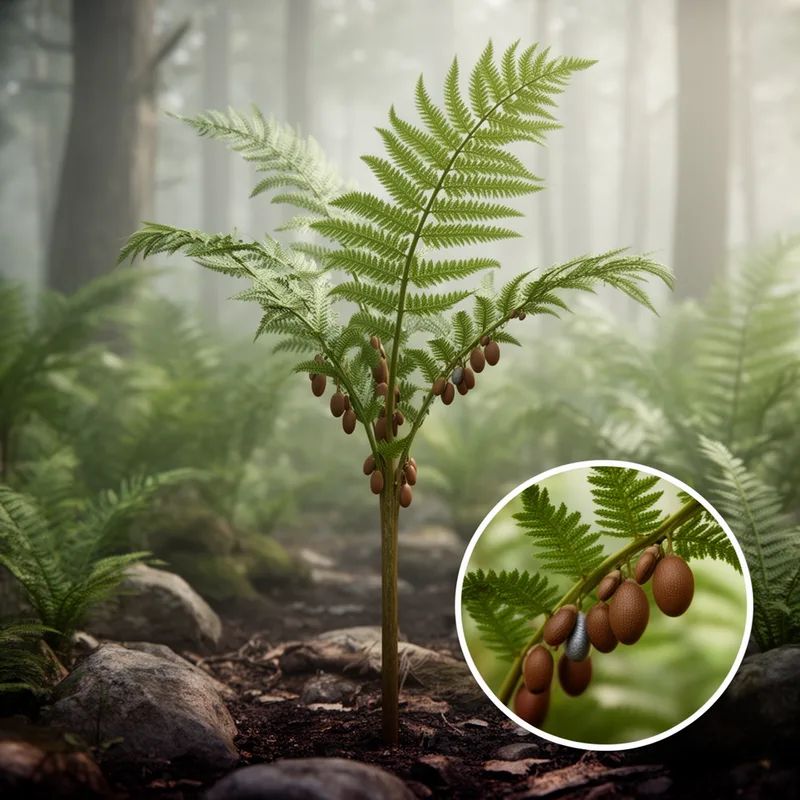
seed fern
- noun
- /siːd fɜrn/
- Specialized
- Many seed ferns were discovered in ancient rock formations.
Examples
-
Fossils of seed ferns provide insights into the evolution of seed plants.
-
Scientists believe that seed ferns dominated many prehistoric forests.
-
The extinction of seed ferns marked a major shift in plant diversity.
-
The seed fern thrived in the humid conditions of the Paleozoic era.
-
During the Paleozoic era, seed ferns thrived, producing seeds in a way that set them apart from modern ferns.
-
Many fossils of seed ferns have been discovered, helping scientists understand the diversity of plant life in ancient ecosystems.
-
The towering trees of the Carboniferous were often accompanied by seed ferns, which contributed to the complexity of prehistoric forests.
Synonyms
A group of extinct seed plants like ferns that lived a very long time ago

A group of ancient seed plants called seed ferns from the Devonian period

A group of extinct plants like ferns but with seeds known from fossils
Extinct seed plants with fern-like leaves from long ago
A group of extinct plants with seeds and fern-like leaves
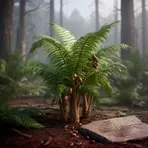
A group of extinct seed plants with leaves like ferns that lived long ago
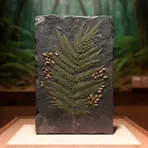
A long-dead plant that makes seeds and looks like a fern
Surface Forms
Morphology
The compound literally combines 'seed' + 'fern' to denote a fern-like plant that produces seeds, so a learner who knows both words can infer it refers to a seed-bearing fern-like plant (a paleobotanical group). The term is taxonomic and compositional rather than idiomatic or metaphorical, making its meaning predictable from the constituents.
Etymology
The noun seed fern names extinct plants that had fern-like leaves but made seeds to grow new plants. Imagine a fern that drops seeds instead of spores; that clear picture explains the name and why we use it for these early seed-producing plants.

