
Pteridospermopsida
- noun
- /ˌtɛrɪdoʊˈspɜrmɒpsɪdə/
- Specialized
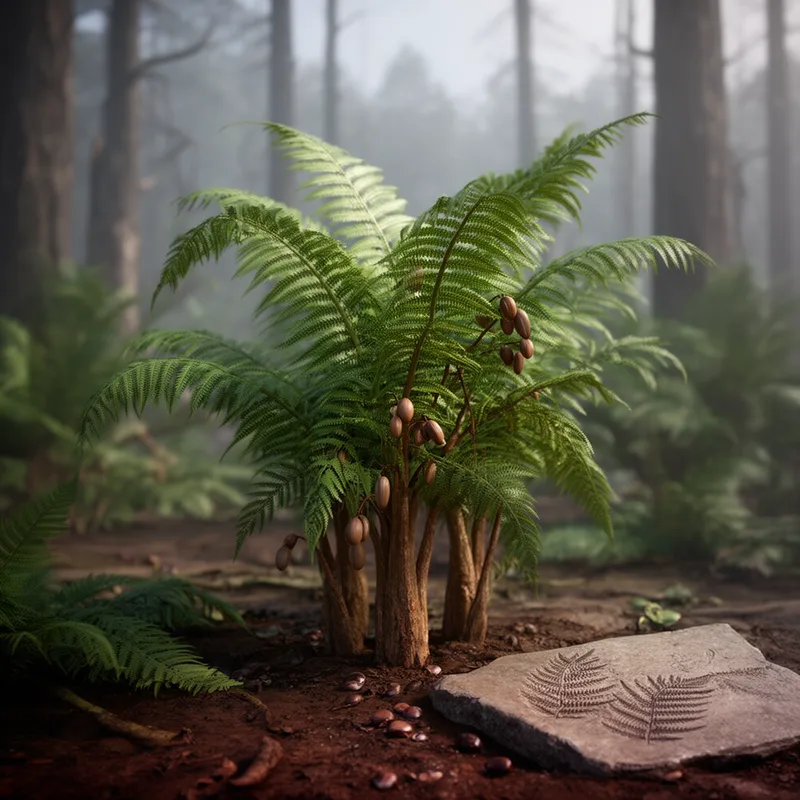
- Pteridospermopsida species are often referred to as seed ferns due to their fern-like leaves and seed-bearing structures.
Examples
-
Fossils of Pteridospermopsida have been key to understanding plant evolution in the Paleozoic era.
-
Many fossils of Pteridospermopsida have been discovered in coal deposits.
-
The extinction of Pteridospermopsida marked a significant transition in prehistoric plant life.
-
The Pteridospermopsida thrived during the Mesozoic era.
-
Many fossils of Pteridospermopsida have been discovered in coal deposits, providing insight into ancient ecosystems.
-
Fossils of Pteridospermopsida have been key to understanding plant evolution during the Paleozoic era.
-
The extinction of Pteridospermopsida marked a significant transition in the evolution of gymnosperms.
Synonyms
A group of extinct plants like ferns but with seeds known from fossils
Extinct seed plants with fern-like leaves from long ago
A group of extinct plants with seeds and fern-like leaves

Plants that looked like ferns but made seeds long ago
Surface Forms
Morphology
Pteridospermopsida = pteridosperm (opaque) = pterido + sperm + opsida
The class-name suffix -opsida is specialized scientific nomenclature, so the immediate base is not easily inferable for an average learner.
Etymology
Pteridospermopsida breaks into Greek parts pterido- meaning 'fern', sperma meaning 'seed', and -opsida meaning 'group'. So the name means a 'group of seed ferns', which makes it easy to remember these long-ago plants looked like ferns but made seeds.

