
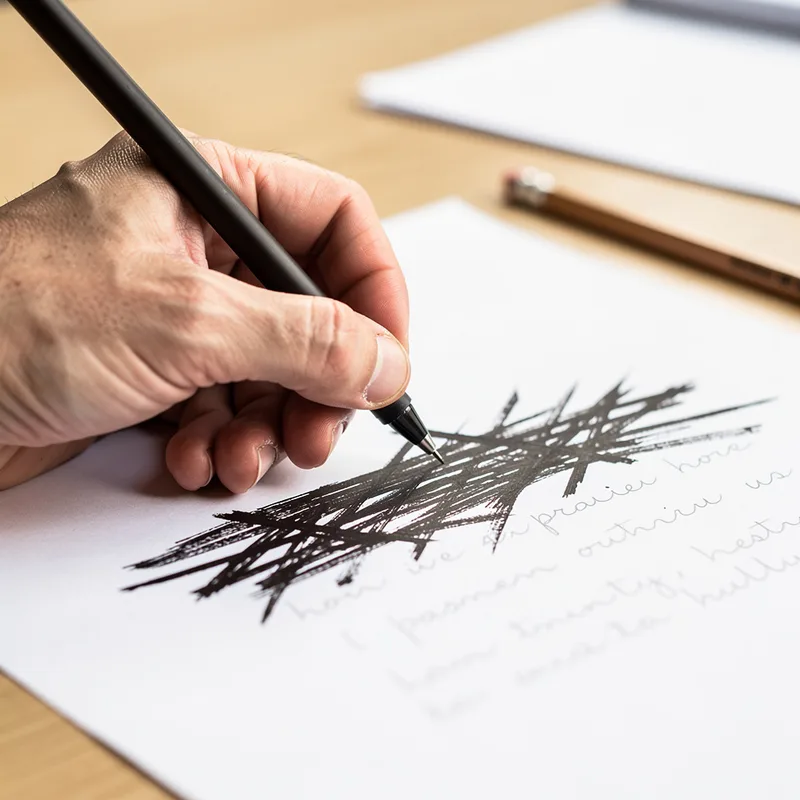
to scratch out
 4
4.0
4
4.0

- phrasal verb
- /skrætʃ aʊt/
- Had my mother known, she would have scratched out the request herself.
- scratch out the word
- scratch her name out
- scratch out a note
Loading YouTube…
Watch on YouTubeBut if there's nothing there, then so just scratch out and start over.
- But if there's nothing there, then so just scratch out and start over.
- You you got that word that you hated and you've plastered it all over the place and then you scratched it out.
Examples
-
But I already scratched it out.
-
"Sure you can." John took his pen, scratched out his autograph, and pleased another fan.
Fiction book (1992) -
I used the hour he was gone to scratch out ideas on a pad of yellow paper.
Fiction book (1997) -
And soon she was caught up in the story, scratching out old lines and jokes and writing in new ones.
Fiction book (1999) -
So let's just scratch out this X&Y here.
-
Soon, an idea slid into view and I scratched out some notes.
Academic text (2010) -
And he stomped inside, scratched out a quick note, and brought it back to them.
Fiction book (1990) -
When I reread that sentence, I scratched out robins and wrote in blue jays.
Fiction book (2001) -
She decided to scratch out the incorrect answer before writing in the correct one.
-
The teacher asked us to scratch out any mistakes in our essays before submitting them.
Synonyms
 144
1.6
144
1.6
Remove marks, writing, or digital files so they are no longer visible
 80
3.4
80
3.4
To remove or cancel something, for example a meeting
 77
3.2
77
3.2
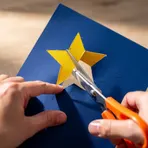
To remove a shape from paper or cloth using scissors
 28
2.0
28
2.0
To remove something from a surface by moving a cloth over it, like tears or dirt
 20
1.0
20
1.0
Remove dirt or marks from a surface by rubbing with a cloth
 14
2.3
14
2.3
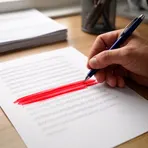
Draw a line through a word or item to show it should be removed
 8
3.7
8
3.7
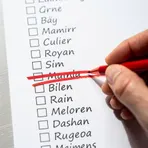
Remove a name or item from a list by drawing a line through it
 1
4.3
1
4.3
Erase a mark by using an eraser or cloth until it disappears
 1
3.4
1
3.4
Remove a mark by moving a cloth or hand over it many times

 1
6.2
1
6.2
Draw a line through words or text to show they should be ignored

To draw a line through written words to show they are wrong
Antonyms

How Complete

Surface Forms
Morphology
The meaning 'to remove or cancel by making marks' follows directly from combining 'scratch' (to mark or scrape, here used as crossing out) with the particle 'out', which in phrasal verbs commonly signals removal or completion. This is a literal, compositional phrasal verb pattern that a B1 learner who knows both constituents can reliably infer.
Etymology
The phrasal verb scratch out comes from the simple act of writing: when you want to cancel a word you scratch it by drawing lines across it so the letters are crossed out. So, the phrase now means 'to remove' or 'cancel' something by making it unreadable.