
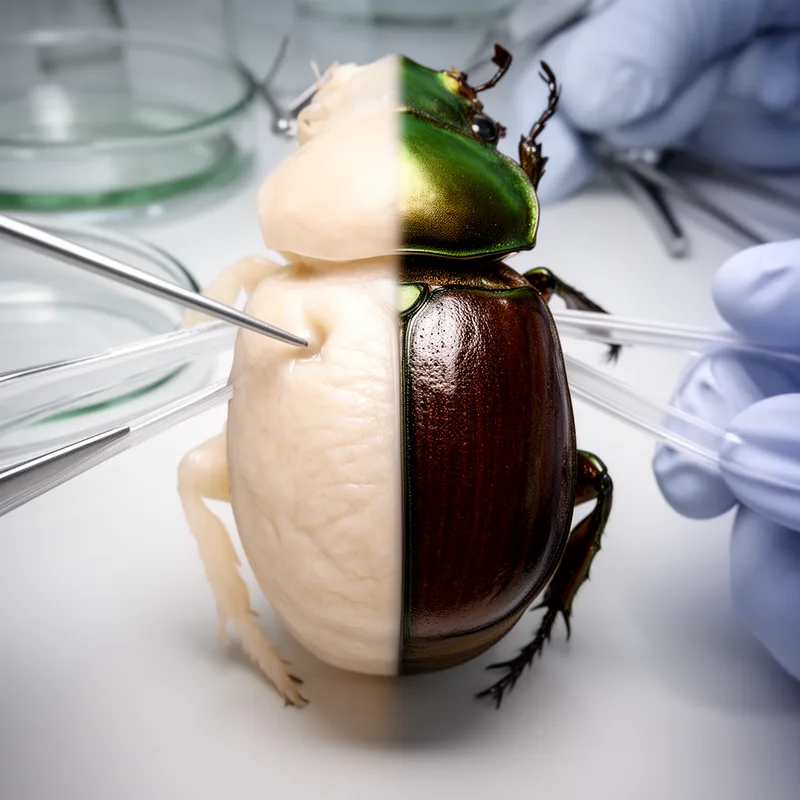
to sclerotize
- verb
- /ˈsklɛrəˌtaɪz/
- Specialized
- The outer shell of the beetle is sclerotized to protect it from predators.
Examples
-
During development, certain tissues sclerotize to form a rigid structure.
-
Scientists sclerotize insect exoskeletons in the lab to study their durability.
-
The researchers discovered how to sclerotize the tissue effectively.
-
Can you explain how we can sclerotize these samples?
-
Researchers often sclerotize the tissues of arthropods to enhance their resistance to environmental challenges.
-
To protect the insect from injury, its body will sclerotize as it matures.
-
In nature, many species sclerotize their shell structures to ensure survival against predators.
Synonyms


 1
9.9
1
9.9
To become hard and stiff in tissue or an organ because of disease

To become hard and tough like hair, nails, or feathers
How Hard

Surface Forms
Morphology
sclerotize = sclerot + ize
Formally composed of the combining form 'sclerot-' (meaning 'hard') plus the productive verb-forming suffix '-ize', but the combining form is technical/Greek-derived and not recognizable to an average B1 learner, so the meaning cannot be reliably derived from familiar English vocabulary.
Etymology
Sclerotize comes from the Greek root skleros, meaning 'hard', and the ending -ize, meaning 'to make'. So, to sclerotize is to 'make hard', which fits its use in biology when tissues become a tough outer layer, like an insect's shell.