
to sclerose


 1
9.9
1
9.9
- verb
- /skləˈroʊz/
- Specialized
- The tissue surrounding the injury had unfortunately sclerosed, making it difficult for healing to occur.
Examples
-
Long-term exposure to toxins has been known to result in sclerosed liver tissue in some patients.
-
The superficial veins become sclerosed either from infections or from the caustic effect of the material being injected.
Academic text (1996) -
Finally, the cyst was sclerosed with 95% ethanol.
Academic text (2007) -
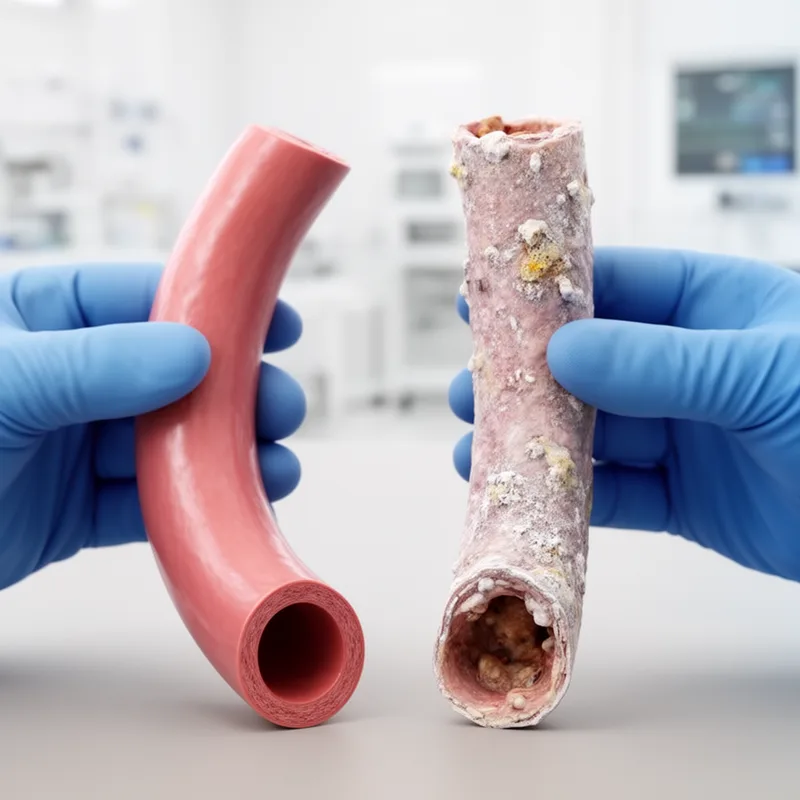
The doctor explained that the arteries can become sclerosed due to plaque buildup over time.
Synonyms

To make a soft body part hard and strong, like an insect shell
Antonyms

How Hard

Surface Forms
Morphology
sclerose = scler (opaque) = scler + ose
The base 'scler' is not a standalone English word, and '-ose' is not a productive verb-forming suffix in English, making the formation opaque.
Etymology
Sclerose comes from the Greek root skleros, which means 'hard'. A helpful memory is 'multiple sclerosis', a familiar medical name where parts become hard, so to sclerose in medicine is to become or make tissue 'hard' or stiff.