
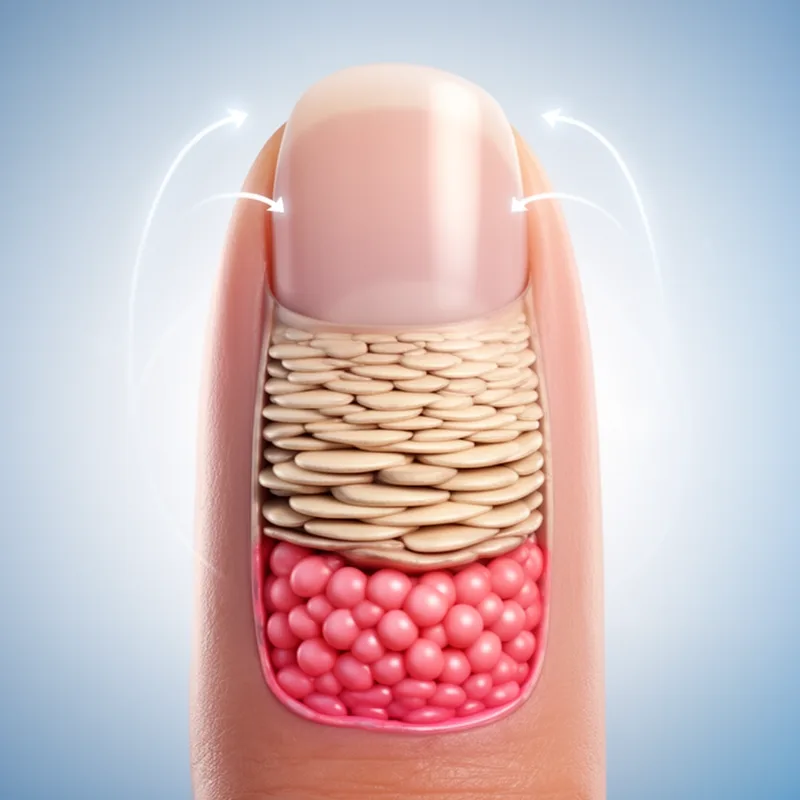
to keratinize
- verb
- /ˈkɛrətɪˌnaɪz/
- Specialized
- Photomicrograph shows the cells with gland-forming pleomorphic nuclei and areas of sheets of keratinizing squamous cells with pleomorphic nuclei.
- keratinizing squamous cells
Examples
-
Amphibian skin thus appears to have limited options for waterproofing because it is thin, poorly keratinized, and therefore supple.
Academic text (2001) -
Calluses are even thickenings of the keratinized layer of the epidermis that form in response to repeated frictional loads.
Academic text (1995) -
These areas are the apparently normal phenotype but are well keratinized.
Blog text (21) -
Well, human hair consists of keratinized cells... although in order to determine whether replication is possible-- I asked you a question.
-
Sections showed the keratinizing stratified squamous epithelium.
Academic text (2007) -
There were areas composed of sheets of keratinizing squamous cells with pleomorphic nuclei.
Academic text (2008) -
Every day the trichologist's hairs—fine, flexible, keratinized filaments—grow less numerous.
Fiction book (1996) -
One important function is protecting the glans the way the eyelid protects the eye; in the absence of a foreskin, the glans becomes keratinized from rubbing against clothing and is much less sensitive.
Blog text (8) -
In the treated ears, the keratinizing squamous epithelial cells appeared to be hypertrophic and, compared with untreated ears, hyperplasia (signifying healing) was less prominent.
Academic text (2005) -
The cells in this area begin to keratinize, making the skin tougher and more resistant to damage.
Synonyms
To make a soft body part hard and strong, like an insect shell
How Keratinized
- Specialized


 1
9.3
1
9.3

- Specialized
Surface Forms
Morphology
Etymology
The word keratinize comes from keratin, a word from Greek that means 'horn', and the ending -ize which means 'to make' or 'become'. So to keratinize is when cells fill with keratin and turn hard, like hair, nails, or feathers.