
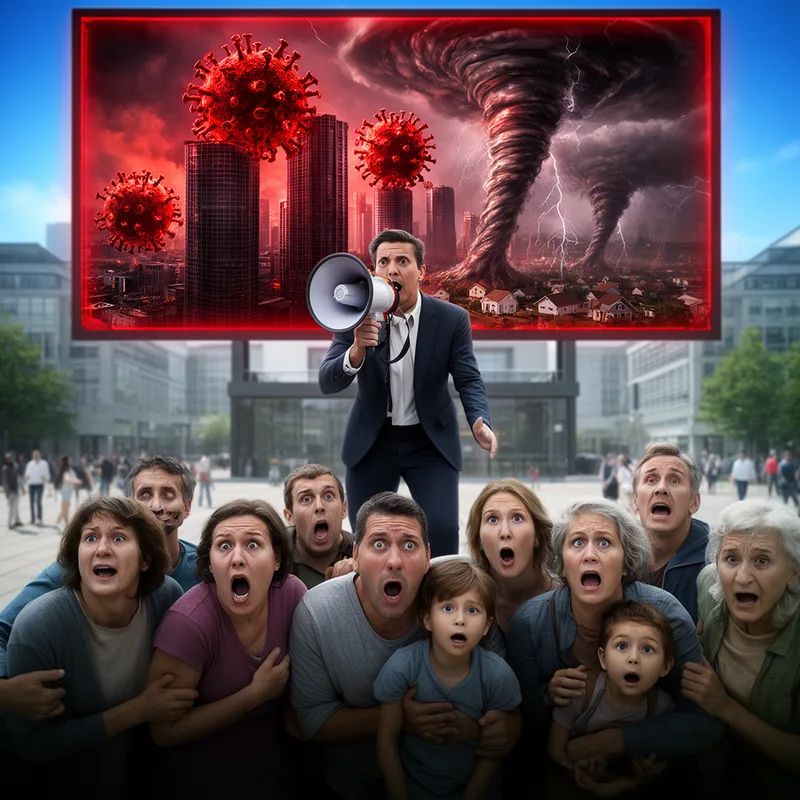
to scaremongering
- verb
- /ˈskɛrˌmʌŋɡərɪŋ/
- Some politicians have been scaremongering to influence public opinion before the election.
Examples
-
The media often scaremongers during elections.
-
Don't scaremonger about the storm!
-
The media was accused of scaremongering during the outbreak by focusing on worst-case scenarios.
-
Experts warned against scaremongering and urged people to rely on verified information.
-
The government faced criticism for scaremongering about potential threats to national security.
-
Before the storm hit, some news outlets engaged in scaremongering by predicting catastrophic damage.
-
Many health experts advised against scaremongering during the pandemic to prevent unnecessary panic.
Synonyms
 ∞
1.0
∞
1.0

To make someone feel afraid or unsure of themselves
 12
6.8
12
6.8
To make stories seem more exciting than they are
 5
7.4
5
7.4
Use people's fears to make them do what you want
 1
8.4
1
8.4
To make people feel afraid on purpose to change what they think or do

To spread fear and doubt to stop people from supporting something

To cry 'fire' when there is none to make people panic
Antonyms

How Frightening
7
4.8
 148
3.2
540
1.0
133
1.9
7
4.9
148
3.2
540
1.0
133
1.9
7
4.9
Surface Forms
Morphology
Etymology
Scaremongering used as a verb joins scare and monger, with monger meaning 'seller' like in fishmonger, so to scaremonger is to 'sell' fear — to spread alarm or worry on purpose.