

to save for later
 23
3.0
23
3.0

- phrasal verb
 :
guardar para más tarde
:
guardar para más tarde
- Why don't we save it for later?
- Let's save some for later
- going to save it for later
- want to save for later
You can use shelves if you want to save things for later and it works in multitasking.
- You can use shelves if you want to save things for later and it works in multitasking.
- So now we saved the the best for last or the hardest for last.
- I'm going to save that for later.
- So today enough tears we'll save that for later.
- You can have a slice and save a slice for later.
- Do you tell people to sort of rein in some of the stuff, save that for later, maybe that'll come out with your screenplay?
- So in many ways I have saved the very best for last.
- Should I eat this food or should I save it for later?
- I mean, you know, and that looks just about right to me and I must save this for later.
- You can save strawberry for later, says one of the Twitch twitch contributors tonight.
Examples
-
We must save them for later.
-
How about you save that tour for later?
-
Sarah, can you save that for later?
-
Can you maybe save that for later?
-
- All right we'll save that one for later.
-
You know, it's like you always say: Why save the good stuff for later?
-
Maybe I should save it for later.
Fiction book (1994) -
I'll save it for later.
-
I'm going to save that one for later.
Fiction book (1993) -
I'll save for later this piece of cake because I want to enjoy it later.
Synonyms
 ∞
1.0
∞
1.0
Keep something for use later
 463
1.0
463
1.0
To put something away to use later
 145
3.1
145
3.1
To keep something for a particular person or purpose
 54
3.1
54
3.1
Leave an option available for later use
 39
2.9
39
2.9
Buy a large supply of something to use later
 26
2.1
26
2.1
Keep or save something for future use
 26
4.6
26
4.6
To keep a large supply of goods for future use
 17
3.2
17
3.2
Keep something for later use
 15
5.5
15
5.5
To delay something until a later time
 13
4.9
13
4.9
Put something in a hidden place to use later
 11
5.0
11
5.0
To stop work on a plan or project for now
 3
2.6
3
2.6
To put something in a safe place to use later
 3
2.9
3
2.9
Put money aside to use if something unexpected happens
 2
2.8
2
2.8
Save part of something to use later
 2
7.9
2
7.9
To delay something and keep it for later use
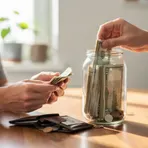 1
3.5
1
3.5
Save money for future use

 1
4.7
1
4.7
To save money or keep goods for later
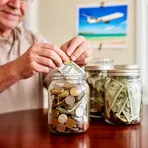 1
6.7
1
6.7
To save money little by little to use later
Antonyms


How Soon

Surface Forms
Morphology
The meaning is directly compositional: 'save' (to keep or reserve) combined with 'for later' (for future use) yields the given meaning without metaphorical shift. This is a common, cross‑linguistic pattern and a B1 learner who knows the constituent words will readily infer the MWE's meaning.
Etymology
The phrase save for later comes from the simple image of someone putting food or money into a box to save and use later instead of using it now. So, it means 'to keep something for future use'.