

to keep back
 2
2.8
2
2.8

- phrasal verb
- /kip bæk/
- To ensure we had enough supplies, I kept back extra food for the group.
Loading YouTube…
Watch on YouTubeSo now that I'm covered in glitter and I don't don't want to get into my cashmere of all the things I keep back here, can I get a makeup wipe?
- So now that I'm covered in glitter and I don't don't want to get into my cashmere of all the things I keep back here, can I get a makeup wipe?
Examples
-
I keep nothing back that will harm you.
Fiction book (1991) -
She decided to keep back a portion of the report to share later.
-
I kept back 50 because that money is supposed to be for protection.
-
Can we keep something back when God asks for all?
Blog text (8) -
l've kept the remaining money back.
-
It's our duty to keep back the crowds and make sure they proceed in an orderly fashion.
Fiction book (1999) -
There’s 40, I’m gonna keep back 10 OK?
-
I kept back some of my savings for a future vacation.
Synonyms
 ∞
1.0
∞
1.0
To store something for later use
 ∞
1.3
∞
1.3
To keep something for someone to use later
 ∞
1.0
∞
1.0
Keep something for use later
 463
1.0
463
1.0
To put something away to use later
 236
3.4
236
3.4
To keep having something such as a job or possession
 145
3.1
145
3.1
To keep something for a particular person or purpose
 87
3.4
87
3.4
Save money or time for a special purpose
 72
1.6
72
1.6
To keep something instead of selling or giving it away
 63
3.4
63
3.4
Protect something from harm or waste by using it carefully
 54
3.1
54
3.1
Leave an option available for later use
 26
2.1
26
2.1
Keep or save something for future use
 23
3.0
23
3.0
Keep something to use at a later time
 17
3.2
17
3.2
Keep something for later use
 13
4.9
13
4.9
Put something in a hidden place to use later
 4
3.7
4
3.7
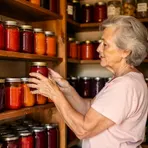
To move something unused from one period to the next so it can still be used
 3
2.6
3
2.6
To put something in a safe place to use later
 2
7.9
2
7.9
To delay something and keep it for later use
 1
3.5
1
3.5
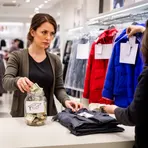
Save money for future use

 1
4.7
1
4.7
To save money or keep goods for later
Antonyms
How Reserved

Surface Forms
Morphology
keep + back
The meaning 'to withhold' is a direct compositional extension of 'keep' (to hold or retain) combined with 'back' (towards the rear / away from others), so a learner who knows both words can readily infer holding something in reserve or preventing it from being released. This particle-verb pattern is a common, predictable phrasal-verb construction in English (and mirrors similar constructions in other languages), making the expression readily understandable at B1.
Etymology
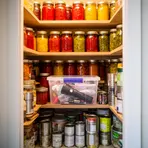
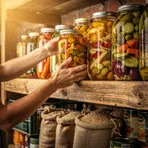
Keep back comes from the image of putting food or money at the back of a shelf for later. If you keep something at the back, you are saving it, so the phrase means 'to reserve' or 'save for later'.