
saprophytic


 1
9.9
1
9.9
- adjective
- /ˌsæprəˈfɪtɪk/
- Specialized
- Saprophytic colonization occurs, wherein there is very little inflammatory host response to the saprophyte.
- saprophytic fungus
Examples
-
Pseudallescheria boydii—a ubiquitous, saprophytic fungus in the class Ascomycetes—is an emerging pathogen found worldwide.
Academic text (2006) -
The fungi are generally saprophytic and rarely cause disease in an immunocompetent host.
Academic text (2006) -
Alkaline pH is conducive to saprophytic fungal overgrowth.
Academic text (2005) -
The diagram also binds objects to scholarship with a two-way arrow to indicate a symbiotic, or some might say saprophytic, relationship.
Academic text (1994) -
Growth of saprophytic fungi has also been seen on the mucosa and crusts in the sinonasal cavity of immunocompetent patients following sinus surgery.
Academic text (2004) -
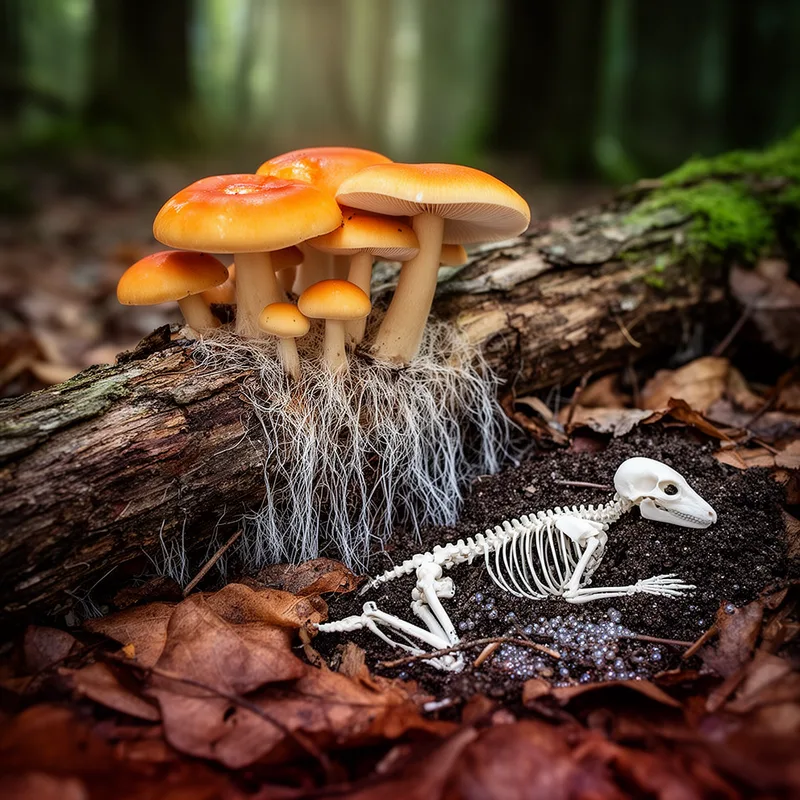
The saprophytic fungi on the forest floor help decompose fallen leaves and other organic matter.
-
In a healthy ecosystem, saprophytic organisms break down dead plants, returning vital nutrients to the soil.
-
Many saprophytic bacteria play a crucial role in recycling nutrients by feeding on decaying organic material.
Synonyms
 1
9.9
1
9.9
To eat dead or rotting animals
Living on or feeding on dead plants and animals

A living thing that eats dead plant and animal matter, like earthworms
Living in rotting plant or animal matter, often in wet places with little oxygen

An animal that eats dead or decaying matter from plants and animals

Feeding on dead animals and their decaying parts
Compounds

Surface Forms
Morphology
saprophytic = saprophyte (transparent) = sapro + phyte + ic
Formed from the noun 'saprophyte' with the adjectival suffix '-ic', so the adjective directly means 'relating to or characteristic of saprophytes'.
Etymology
The word saprophytic comes from Greek parts sapro- meaning 'rotten' and -phytic meaning 'plant' or 'to grow'. So a saprophytic organism is like a 'plant' that lives on dead or decaying matter and gets its food from rot, which is why mushrooms and many soil bacteria break down leaves and wood.