
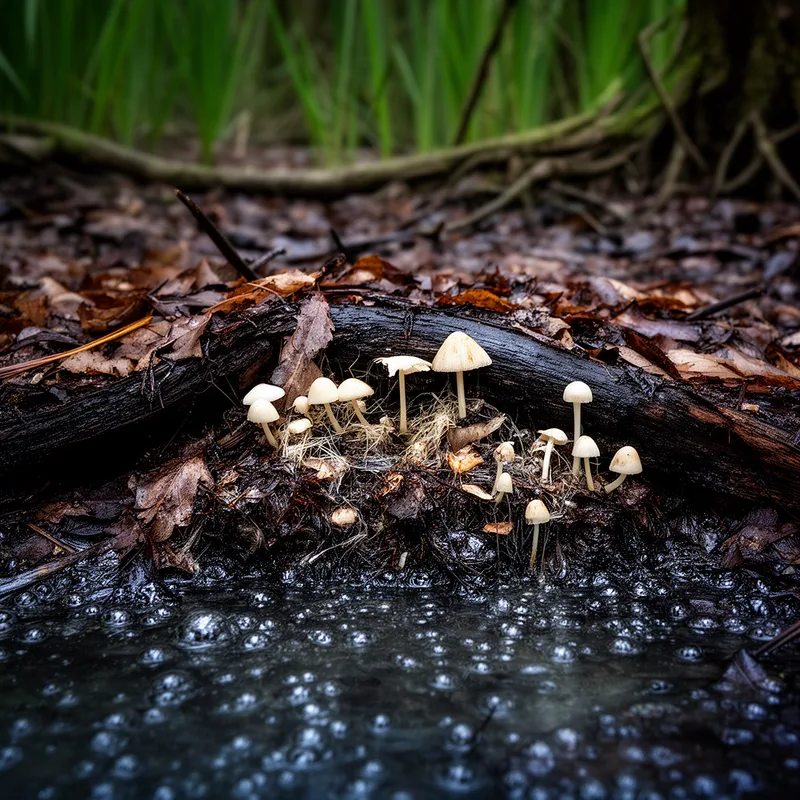
saprobic
- adjective
- /səˈproʊbɪk/
- Specialized
 :
sapróbico
:
sapróbico
- A saprobic habitat supports organisms that depend on decaying plant or animal matter for nutrition.
Examples
-
Some fungi exhibit a saprobic lifestyle, feeding exclusively on organic detritus in their surroundings.
-
Certain bacteria are described as saprobic because they thrive in flooded, oxygen-poor soils.
-
The saprobic conditions of the marsh provide a unique habitat.
-
Certain saprobic organisms thrive in low-oxygen environments.
-
A saprobic habitat supports organisms that depend on decaying plant or animal matter for nutrition.
-
Certain bacteria are described as saprobic because they thrive in flooded, oxygen-poor soils.
-
Some fungi exhibit a saprobic lifestyle, feeding exclusively on organic detritus in their surroundings.
Synonyms



 1
9.9
1
9.9
Getting food by breaking down dead plants and animals
Antonyms

Surface Forms
Morphology
saprobic = saprobe (semi-transparent) = sapro + ic
Formally derived from the noun 'saprobe' with the regular adjectival suffix '-ic', but the base and combining form 'sapro-' are specialised biological vocabulary unfamiliar to average learners.
Etymology
Saprobic comes from Greek parts sapro- meaning 'rotten' and -bio meaning 'life', the same bio you see in biology. So a saprobic living thing 'lives on' rotten plant or animal matter and is often found in places with little oxygen.