
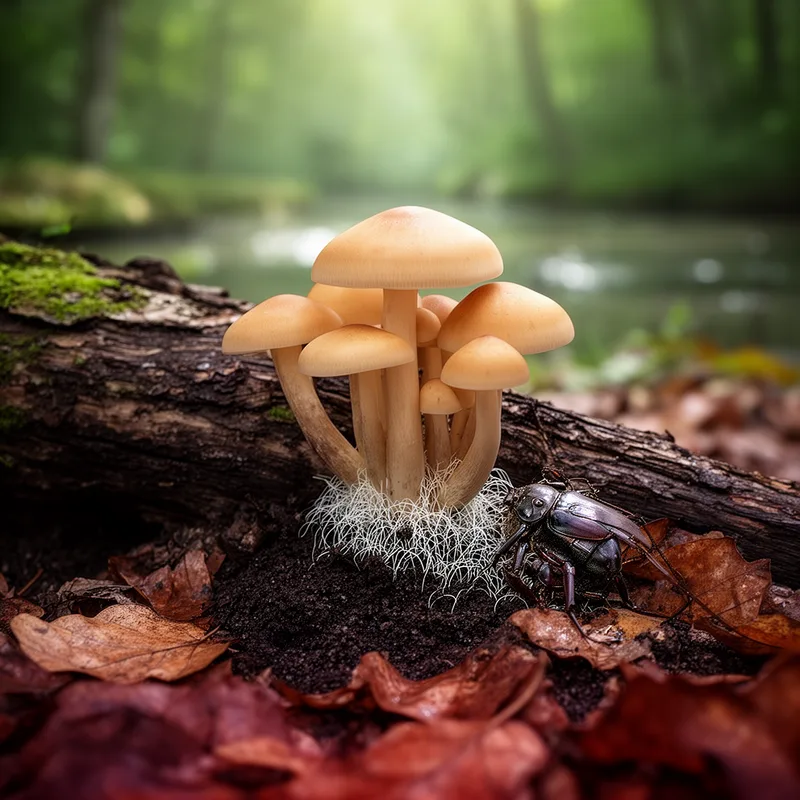
saprobe
- noun
- /ˈsæproʊb/
- Specialized
- The pond was filled with saprobes thriving on decaying leaves and dead insects.
Examples
-
Fungi are classic examples of saprobes, breaking down organic matter in the soil.
-
A saprobe plays an important role in recycling nutrients within aquatic ecosystems.
-
The saprobe thrives in the decaying leaves.
-
Many saprobes play a crucial role in nutrient cycling.
-
Many saprobes, such as certain fungi and bacteria, are essential for breaking down dead plant material.
-
In a wetland ecosystem, a diverse community of saprobes decomposes organic debris, enriching the soil.
-
The health of the pond's ecosystem depends on various saprobes that feed on decaying organic matter.
Synonyms


 1
9.9
1
9.9
A living thing, often a fungus, that eats dead plants or animals

A living thing that eats dead plants or animals
Surface Forms
Morphology
saprobe = sapro + be
Formed from technical combining forms 'sapro-' (rotten) + '-be' (organism), which are not standalone English words and therefore not transparent to an average B1 learner.
Etymology
Saprobe comes from the Greek parts sapros 'rotten' and bios 'life', so it helps to think of it as 'life on rotten things'. That is why a saprobe is an organism that lives on and feeds from decaying material, often in still or dirty water.