

detritivorous
- adjective
- /dɪˈtraɪtɪvərəs/
- Specialized
- The health of the forest soil depends on various detritivorous insects that process organic matter.
Examples
-
The replacement of native catchment vegetation by exotic plant species could alter or perhaps entirely change the species composition of detritivorous sediment biota in streams.
Academic text (2000) -
Many detritivorous organisms play a crucial role in breaking down dead plant material in the ecosystem.
-
The huge stocks of detritivorous haplochromines observed before the collapse of the 1980s might have been at least partly a reflection of the increase in primary productivity.
Academic text (1992) -
For example, the diversity of above-sediment primary producers near wetlands may be linked to the diversity of detritivorous sediment biota because detritivores influence nutrient regeneration.
Academic text (2000) -
In aquatic environments, detritivorous species help recycle nutrients by consuming decaying matter.
Synonyms
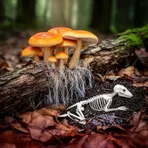


 1
9.9
1
9.9
Getting food by breaking down dead plants and animals
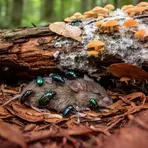
Living on or feeding on dead plants and animals
Surface Forms
Morphology
detritivorous = detritivore (semi-transparent) = detritus + vore + ous
The adjective is a regular derivation from the specialized noun 'detritivore' with -ous, but the detritus/vore base is technical and not readily inferable for most learners.
Etymology
Detritivorous comes from the Latin detritus, meaning 'dead bits' or 'debris', and the part -vorous from Latin vorare, meaning 'to eat' (the same eating root in carnivorous and voracious). So a detritivorous animal or insect eats dead plant and animal material and helps recycle nutrients in nature.