
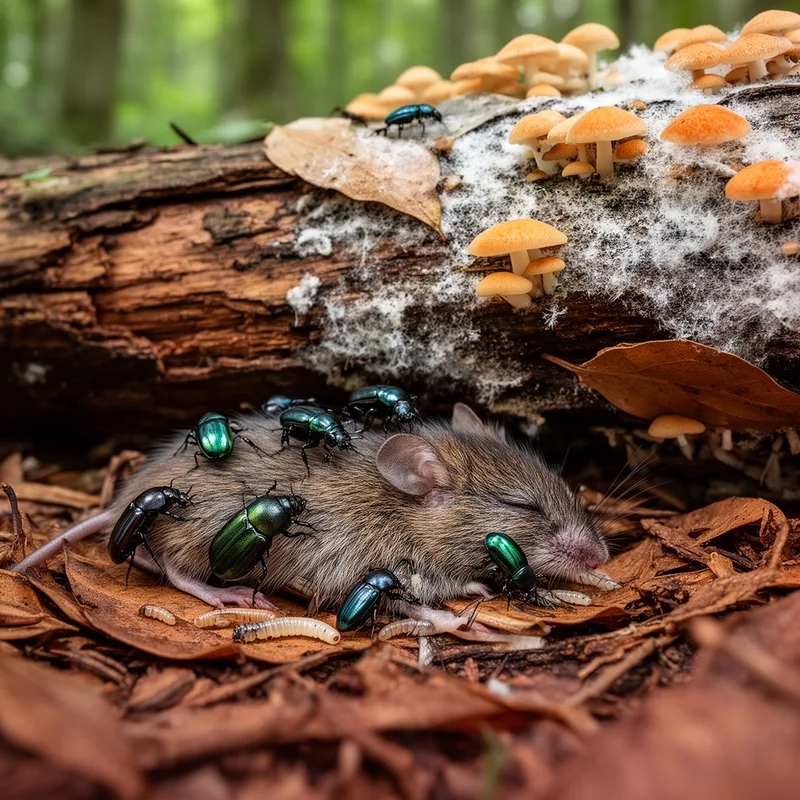
necrophilic
- adjective
- /ˌnɛkrəˈfɪlɪk/
- Specialized
- Certain necrophilic insects play a vital role in breaking down animal remains in forests.
Examples
-
Some beetles are known for their necrophilic behavior, colonizing carcasses soon after death.
-
The biologist observed a necrophilic fungus growing rapidly on the decaying log.
-
The necrophilic behavior of certain fungi helps decompose organic matter.
-
Some bacteria exhibit necrophilic traits by thriving on decaying matter.
-
Certain necrophilic insects play a vital role in breaking down animal remains in forests.
-
The biologist observed a necrophilic fungus growing rapidly on the decaying log.
-
Some bacteria exhibit necrophilic traits by thriving on decaying matter.
Synonyms


 1
9.9
1
9.9
Getting food by breaking down dead plants and animals
 1
9.9
1
9.9
To eat dead or rotting animals

A living thing that eats dead plant and animal matter, like earthworms

Feeding on dead animals and their decaying parts

An animal that eats dead or decaying matter from plants and animals
Surface Forms
Morphology
necrophilic = necrophilia (semi-transparent) = necro + phil + ic
The transition from 'necrophilia' to 'necrophilic' is clear, but understanding the root 'necro' may not be straightforward for all learners.
Etymology
Necrophilic comes from the Greek parts necro- meaning 'dead body' and -philic meaning 'loving' or 'attracted to', the same 'philic' idea you see in bibliophile ('book lover'). So a necrophilic species or insect is one that is attracted to or lives on dead and decaying matter.