
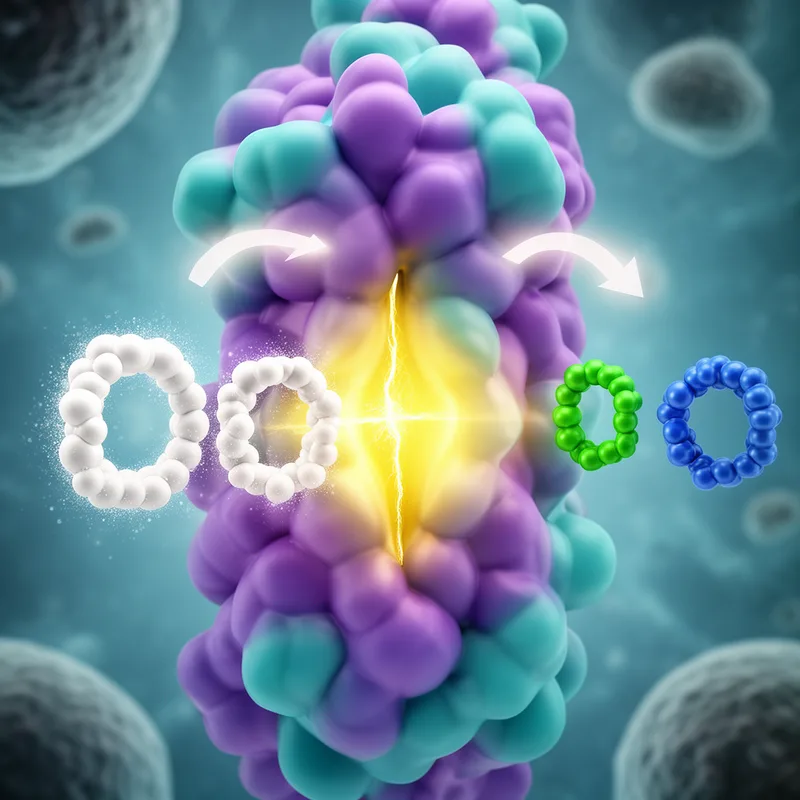
saccharase
- noun
- /ˈsækəˌreɪs/
- Specialized
- Saccharase catalyzes the conversion of sucrose into glucose and fructose during digestion.
Examples
-
Saccharase is essential for digesting sucrose in many organisms.
-
A deficiency in saccharase can lead to problems metabolizing certain sugars.
-
Scientists studied the activity of saccharase in yeast cultures.
-
The saccharase enzyme plays a crucial role in digestion.
-
Many saccharases are found in various fruits.
-
In humans, saccharase aids in breaking down dietary sugars for absorption.
-
Research shows that saccharase levels influence how effectively organisms utilize sugar.
Synonyms


 1
8.9
A protein that breaks down complex sugars into simple sugars for digestion
 1
9.5
An enzyme that breaks sugars made of two parts into simple sugars
 1
8.4
A protein in the body that breaks table sugar into two simple sugars

A substance that turns table sugar into two simple sugars
Surface Forms
Morphology
saccharase = sugar (semi-transparent) = sacchar + ase
Formed from the combining form 'sacchar-' (meaning 'sugar') plus the enzyme suffix '-ase'; the scientific combining form and suffix may be unfamiliar to general learners.
Etymology
Saccharase comes from the root sacchar- meaning 'sugar' and the enzyme ending -ase, the same ending you see in lactase. So saccharase is an enzyme that breaks the sugar sucrose into smaller sugars like glucose and fructose.