
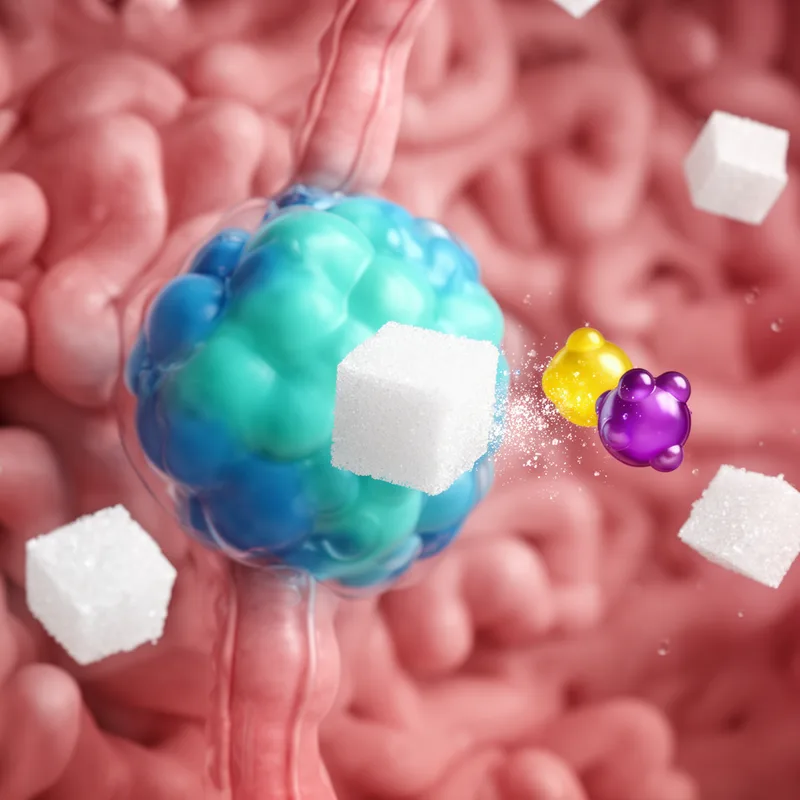
sucrase


 1
8.4
- noun
- /ˈsuːkreɪs/
- Specialized
- Scientists isolated sucrase to study its role in carbohydrate metabolism.
Examples
-
The small intestine produces sucrase to help digest table sugar.
-
A deficiency of sucrase can cause problems in sugar absorption.
-
The enzyme sucrase is essential for sugar digestion.
-
Do you know how sucrase functions?
-
The enzyme sucrase is crucial for breaking down sucrose into glucose and fructose during digestion.
-
In the small intestine, sucrase helps to break down sugar molecules into simpler forms that the body can absorb.
-
The body depends on sucrase to efficiently process sugars we consume in foods like fruits and table sugar.
Synonyms

A substance that turns table sugar into two simple sugars
A protein that breaks table sugar into glucose and fructose
Surface Forms
Morphology
sucrase = sucrose (transparent) = sucr + ase
The name is formed from the substrate stem 'sucr-' plus the productive enzyme-forming suffix '-ase'; learners familiar with enzyme naming (e.g., lactase, maltase) can predict the meaning.
Etymology
Sucrase comes from sucrose ('sugar') and the ending -ase ('enzyme'), so sucrase is the enzyme that breaks table sugar into the smaller sugars glucose and fructose.