
disaccharidase


 1
9.5
- noun
- /ˌdɪsəˈkærɪdeɪz/
- Specialized
- Studies indicate that higher disaccharidase activity can enhance the digestion of certain complex carbohydrates.
Examples
-
That's when we learned he had the extremely rare condition of disaccharidase deficiency, and that he lacks all disaccharidases, rather than only one (lactose intolerance is a form of disaccharidase deficiency).
Blog text (31) -
That's when we learned he had the extremely rare condition of disaccharidase deficiency, and that he lacks all disaccharidases, rather than only one (lactose intolerance is a form of disaccharidase deficiency).
Blog text (31) -
There are a variety of enzymes—amylases, disaccharidases, etc.—that perform this function.
Blog text (5) -
They were diagnosed with disaccharidase deficiency, so a change in diet was in order for him, but it wasn't caused by any vaccine, just his genes.
Blog text (31) -
That's when we learned he had the extremely rare condition of disaccharidase deficiency, and that he lacks all disaccharidases, rather than only one (lactose intolerance is a form of disaccharidase deficiency).
Blog text (31) -
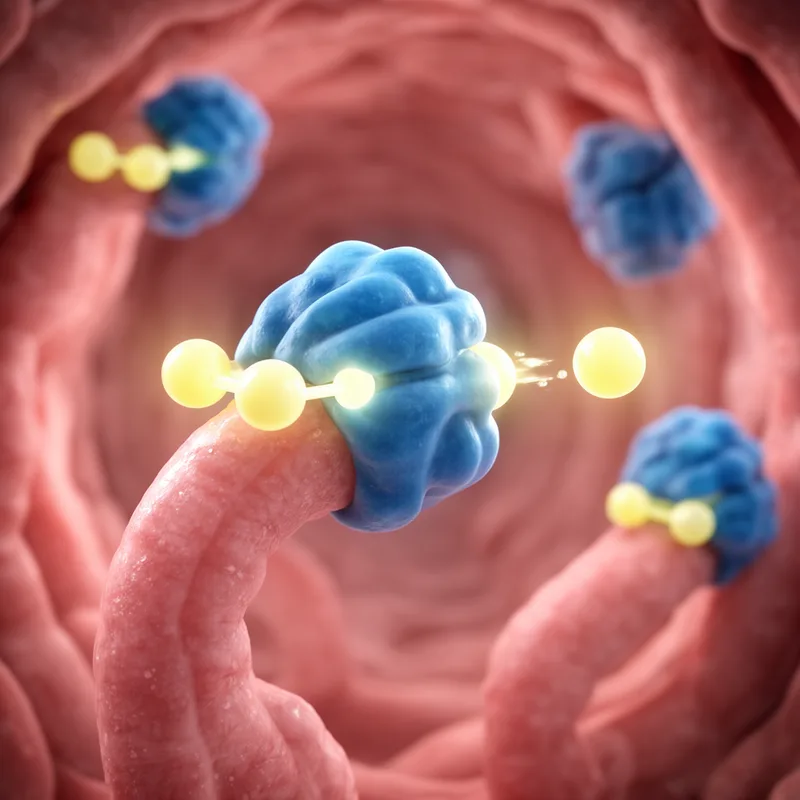
Disaccharidase enzymes are crucial for breaking down sugars like sucrose into glucose and fructose.
-
A person with disaccharidase deficiency may struggle to digest foods that contain lactose or sucrose.
Surface Forms
Morphology
disaccharidase = disaccharide (transparent) = disaccharide + ase
The suffix '-ase' is a standard enzyme-forming suffix added to the noun 'disaccharide', indicating an enzyme that acts on disaccharides.
Etymology
Disaccharidase breaks into parts: di- meaning 'two', sacchar- meaning 'sugar', and -ase meaning 'an enzyme'. So a disaccharidase is an enzyme that breaks a 'two-sugar' molecule called a disaccharide into single sugars.