

to rove
 22
6.4
22
6.4

- verb
- /roʊv/
- After his retirement, he loved to rove around the countryside, exploring new trails.
- roving ambassador
- roving eyes
Examples
-
The refreshment table? Her gaze roved over the crowded room as if seeking its location.
Fiction book (1994) -
Buster's gaze was roving back and forth across the restaurant and patio.
Fiction book (1995) -
Now, keep those eyes roving, boys.
-
Or is your eye roving, without...
-
Young men with time to spare and a roving eye come to the theater in hundreds.
Fiction book (1993) -
A good move, that, since he would be expected to keep his gaze roving over his customers.
Fiction book (1991) -
Then he sat back, his breath coming in gasps, and his eyes roved over those books.
Academic text (2007) -
As a runaway, he'd worked where he could, mostly as a roving farmhand.
Fiction book (1993) -
Quoyle's own eyes roved to a water-stained engraving on the wall.
Fiction book (2002) -
They spent the summer roving through national parks, looking for hidden waterfalls.
Synonyms
 379
1.3
379
1.3
Move around without a fixed direction, often slowly and in curves
 331
2.9
331
2.9
To move slowly without a clear direction, for example when air or water move something
 189
2.5
189
2.5
Move around without a fixed place, often while looking for something
 100
2.0
100
2.0
To move from place to place without a fixed home or plan
 70
2.8
70
2.8
To move away from the correct place or path and wander
 25
3.3
25
3.3
To move or travel freely over an area
 17
5.5
17
5.5
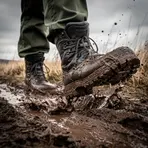
To walk with heavy steps, often over rough ground
 14
4.4
14
4.4
To walk for pleasure without a fixed route
 8
3.1
8
3.1
To move around a place on your feet without a clear purpose
 8
7.6
8
7.6
To walk around without a clear plan, often slowly and without much energy
 4
6.9
4
6.9
To walk around without a clear purpose
 3
9.0
3
9.0
To move around places for pleasure without a plan
 3
7.9
3
7.9
To move around in a relaxed, aimless way without a fixed plan
 2
7.7
2
7.7
Move around with no set place to go for fun


 1
9.9
1
9.9
To move from place to place without a home
 1
6.5
1
6.5
To move around slowly doing small jobs in no hurry
 1
9.9
1
9.9
Move around without a clear plan or purpose

To walk slowly without a clear purpose
Antonyms


Compounds

How Aimless

Surface Forms
Etymology
Rove comes from an old English word meaning 'to wander' and it shares a root with rover, like the 'Mars rover' that moves around. So to rove is to travel or move about without a fixed place or plan.