

to stray
 70
2.8
70
2.8

- verb
- /streɪ/
- Hey, I'm asking you, please don't stray far from us.
- stray far
- stray away from
- stray off course
Loading YouTube…
Watch on YouTubeAnd, and in order to fulfil that biology, they shouldn't stray from any particular path.
- And, and in order to fulfil that biology, they shouldn't stray from any particular path.
- And because I've never strayed from that, they've never strayed from their part.
- So when people stray away from God, I believe they stray away from wisdom.
- How far have we strayed from that now?
- Like men have tended to kind of stray.
- We know that in all creation only the human family has strayed from the Sacred Way.
- And I very rarely stray from those.
- We don't like it when our partner strays.
- Like I walk through Independence Hall and I think how far we've, yeah, we've strayed.
- They're more or less independent of each other, although they do stray into each other's fields to some degree.
- But as I mentioned earlier, we've also evolved a deep desire to stray.
- It should have been if the actors start winking at the camera, it it it just strays into farce.
- I, I, I was brought up with Christianity in, in my childhood and, and then I strayed.
Examples
-
He's giving us a chance to return to him, even those who have strayed in the past.
-
The fifth reason why God would allow you to meet the right man at the wrong time is that you won't stray too far from the path.
-
And remember, no matter how far from home you may stray, the love we all share is here to stay.
-
So when people stray away from God, I believe they stray away from wisdom.
-
It's the sheep that stray that you most want back.
-
I'm going to stray from what a lot of people believe is the norm in life.
-
I strayed from the path, and I paid the price.
-
Mr. Pecksniff, being out walking by himself, took it into his head to stray into the churchyard.
Academic text (2010) -
Now and again, as he walked, his thoughts strayed to the lost magic of the Sword of Leah.
Fiction book (1991) -
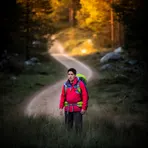
I strayed from the trail during my hike and got lost in the woods.
Synonyms
 379
1.3
379
1.3
Move around without a fixed direction, often slowly and in curves
 331
2.9
331
2.9
To move slowly without a clear direction, for example when air or water move something
 189
2.5
189
2.5
Move around without a fixed place, often while looking for something
 100
2.0
100
2.0
To move from place to place without a fixed home or plan
 25
3.3
25
3.3
To move or travel freely over an area
 22
6.4
22
6.4
To travel around without a fixed plan, often looking for something
 14
4.4
14
4.4
To walk for pleasure without a fixed route
 8
7.6
8
7.6
To walk around without a clear plan, often slowly and without much energy
 8
3.1
8
3.1
To move around a place on your feet without a clear purpose
 7
5.3
7
5.3
To move around a place without a clear reason, often in a group
 6
5.0
6
5.0
Moving from place to place without a clear purpose
 4
6.9
4
6.9
To walk around without a clear purpose
 3
7.9
3
7.9
To move around in a relaxed, aimless way without a fixed plan
 2
4.1
2
4.1
Moving from place to place without a fixed home
 2
8.2
2
8.2
To travel without a set plan to explore and think


 1
9.9
1
9.9
To move from place to place without a home
 1
9.9
1
9.9
Move around without a clear plan or purpose
Lost after moving away from the path or home where it should be

Moving without a fixed direction or plan

Moving freely over a wide area or from one topic to another

To float without control and with no clear direction, as a boat or a group's plans
Antonyms

Compounds
How Far

Surface Forms
Etymology
To stray as a verb comes from the same old idea of 'wandering', so to stray is to move away from the correct place or path, like someone walking off a trail.