
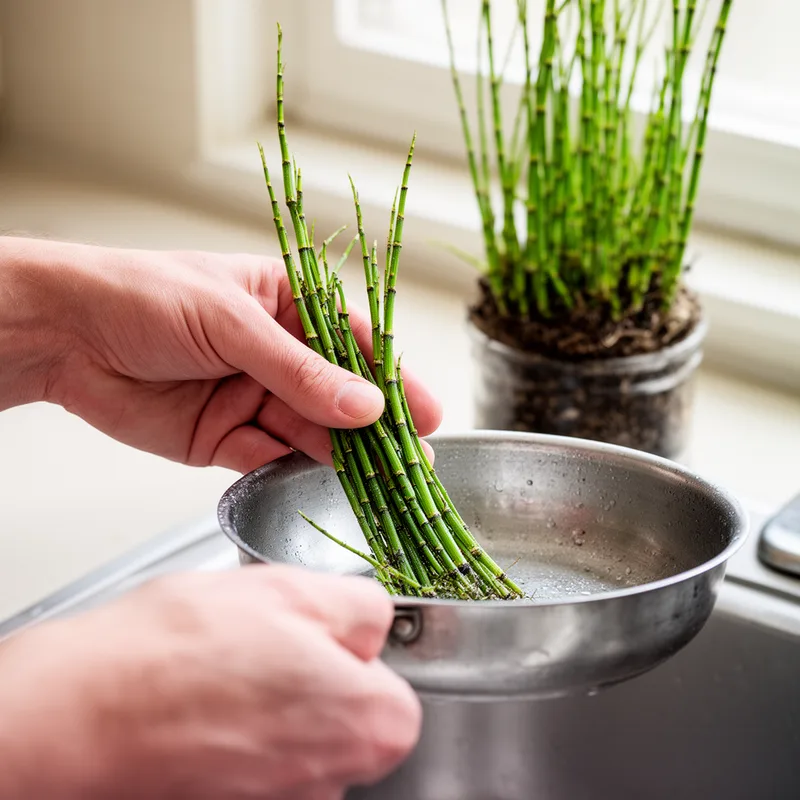
rough horsetail
- noun
- Specialized
- The rough horsetail has distinctive jointed stems that feel gritty to the touch.
Examples
-
Centuries ago, people used rough horsetail to scrub and polish pans.
-
Gardeners appreciate rough horsetail for its ability to thrive in wet soil.
-
The rough horsetail is often found near wetlands.
-
We used rough horsetails to clean the old pots.
-
The gardener planted several rough horsetail plants near the pond for their unique texture.
-
In the past, rough horsetail was commonly used for cleaning pots and pans due to its abrasive surface.
-
Many people enjoy using rough horsetail in their garden because it adds a distinctive look with its tall, erect stems.
Synonyms
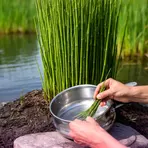
A plant with tall rough green stems once used to clean pots
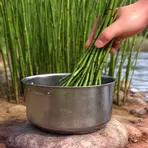
A plant with rough, jointed stems that people once used to clean pots
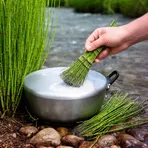
A green plant with thin rough stems once used to scrub pots and metal tools
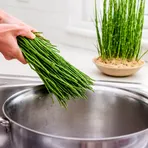
An evergreen plant with straight, rough stems once used to scrub pots
Surface Forms
Morphology
The meaning is directly compositional: 'rough' describes the texture and 'horsetail' names the plant, so a learner who knows both words can infer this is a type of horsetail with a rough texture or stems. This noun-compound pattern is regular and cross-linguistically common, making the expression immediately understandable to a B1 learner.
Etymology
Rough horsetail is named for its stiff stems: horsetail because they look like a 'horse's tail', and rough because the stems feel rough to the touch. People once used those rough stems to 'scrub' pots and metal, so the name reminds us of the plant's texture and its use for cleaning.

