
Equisetum hyemale
- noun
- Specialized
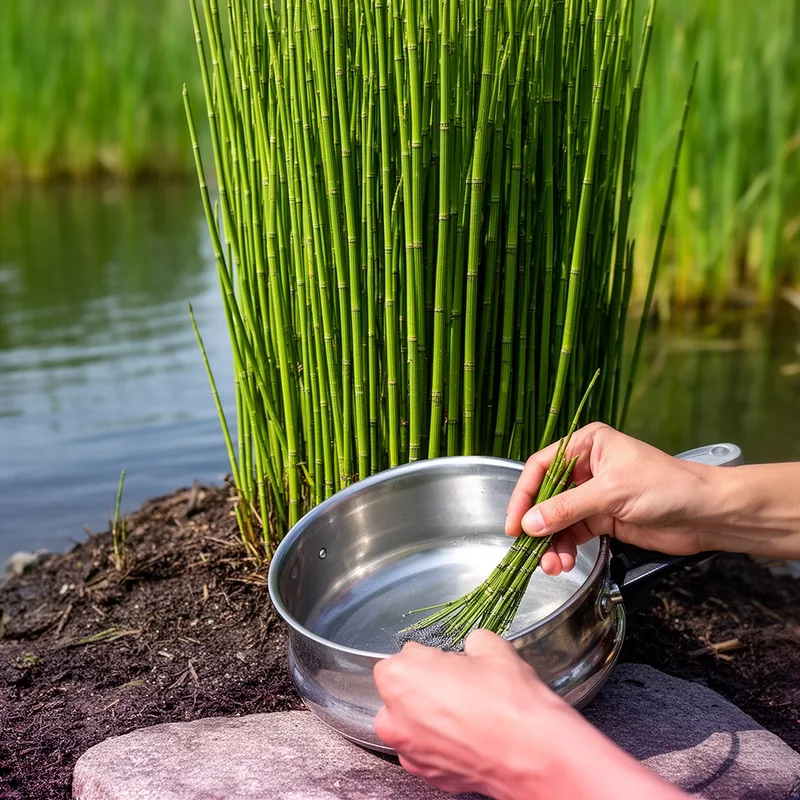
- The stems of Equisetum hyemale are rough and were once used for cleaning pots.
Examples
-
Gardeners often plant Equisetum hyemale along ponds for its striking upright appearance.
-
The stiff, rough stems of Equisetum hyemale were traditionally used to scour metal utensils due to their abrasive texture.
-
A patch of Equisetum hyemale thrives even in wet, poorly drained soils.
-
The Equisetum hyemale thrives in wet, marshy areas.
-
I saw Equisetum hyemale growing along the riverbank.
-
In many gardens, Equisetum hyemale is favored for its evergreen appearance and ability to thrive in moist conditions.
-
The robust structure of Equisetum hyemale makes it ideal for areas that are frequently wet and require plants that can withstand such environments.
Synonyms

A plant with rough, jointed stems that people once used to clean pots

An evergreen plant with rough, jointed stems that people use to scrub pans
Surface Forms
Morphology
Equisetum + hyemale
This is a Latin binomial (scientific) name rather than a regular compositional English phrase. Even if a learner recognised 'Equisetum' as a genus of horsetails, the species epithet 'hyemale' is obscure/not a standard English word and the full descriptive meaning (evergreen, rough‑edged stems, used for scouring) is not derivable from the parts, so a B1 learner would not infer the specific meaning from the constituents.
Etymology
Equisetum hyemale comes from Latin words that paint a simple picture: Equisetum means 'horse's tail' because the long, upright stems look like a tail, and hyemale means 'winter' because these stems stay green in cold months. So the name fits this horsetail plant that lasts through winter and even has rough stems once used for cleaning pots.

