
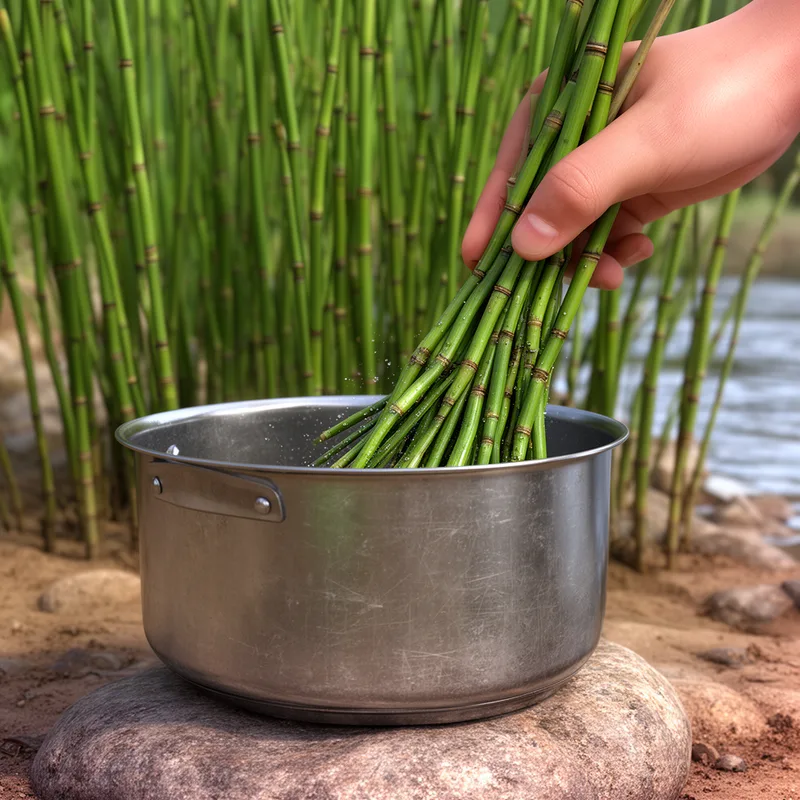
scouring rush
- noun
- /ˈskaʊərɪŋ rʌʃ/
- Specialized
- The scouring rush grows near the riverbank.
- scouring rush horsetail
Examples
-
I found a patch of scouring rush along the riverbank that can grow up to two feet tall.
-
Botanists often identify scouring rush by its unique, rough-edged green stems.
-
Early settlers used the abrasive stems of scouring rush to clean their pots and pans.
-
The scouring rush grew abundantly along the riverbank, its tough stems brushing against the rocks.
-
Many gardeners appreciate the scouring rush for its unique appearance.
-
The scouring rush is an evergreen plant that has been traditionally used for cleaning kitchen utensils.
-
Many gardeners appreciate the scouring rush for its unique, rough-edged stems and low maintenance needs.
Synonyms
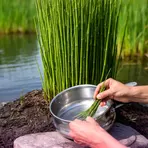
A plant with tall rough green stems once used to clean pots
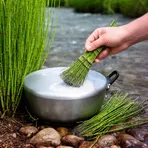
A green plant with thin rough stems once used to scrub pots and metal tools
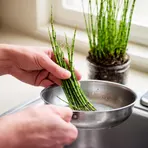
An evergreen plant with rough, jointed stems that people use to scrub pans
Surface Forms
Morphology
Etymology
The plant scouring rush gets its name from how people used it: its rough, jointed stems were great for scouring pots and pans, and rush is a word for a kind of plant. So the name links the plant to the idea of 'cleaning'.

