
prothrombinase
- noun
- /proʊˈθrɑːmbɪneɪs/
- Specialized
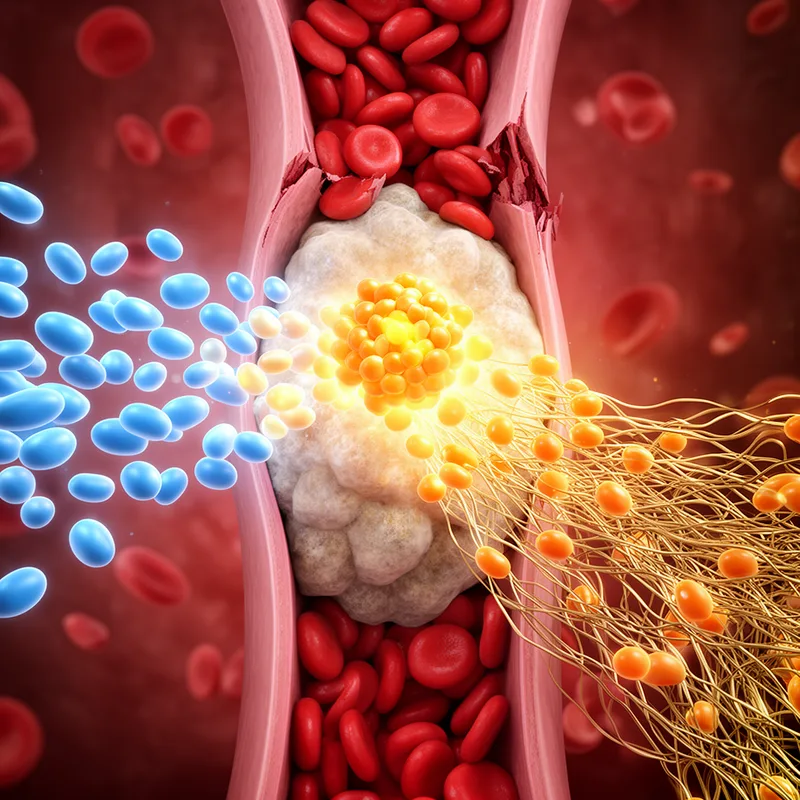
- Prothrombinase is an essential enzyme that helps convert prothrombin into thrombin during the clotting process.
Examples
-
The formation of prothrombinase on platelets is essential for rapid thrombin generation during wound healing.
-
A deficiency in prothrombinase activity can result in impaired blood clotting and excessive bleeding.
-
Prothrombinase plays a critical role in the final steps of the blood coagulation cascade.
-
The prothrombinase complex plays a crucial role in blood clotting.
-
Without prothrombinase, the coagulation process would fail.
-
Deficiencies in prothrombinase can lead to serious bleeding disorders.
-
In the coagulation cascade, prothrombinase is critical for ensuring effective blood clot formation.
Synonyms

A substance from tiny blood cells that helps blood form a clot

A substance released by blood platelets that helps blood to clot
A protein released by blood platelets that starts blood clotting by making thrombin
A substance that helps blood clot by turning a blood protein into a clotting chemical
A blood protein that helps form a clot to stop bleeding
Surface Forms
Morphology
prothrombinase = prothrombin (transparent) = prothrombin + ase
Formed by adding the productive enzyme suffix '-ase' to the noun 'prothrombin', clearly indicating an enzyme acting on prothrombin.
Etymology
Prothrombinase comes from three parts: pro- meaning 'before', thrombin from a word for 'clot', and -ase which marks an 'enzyme'. So prothrombinase is the enzyme that turns prothrombin into thrombin, the protein that makes blood 'clot', which is why the word is used for a key step in blood clotting.

