
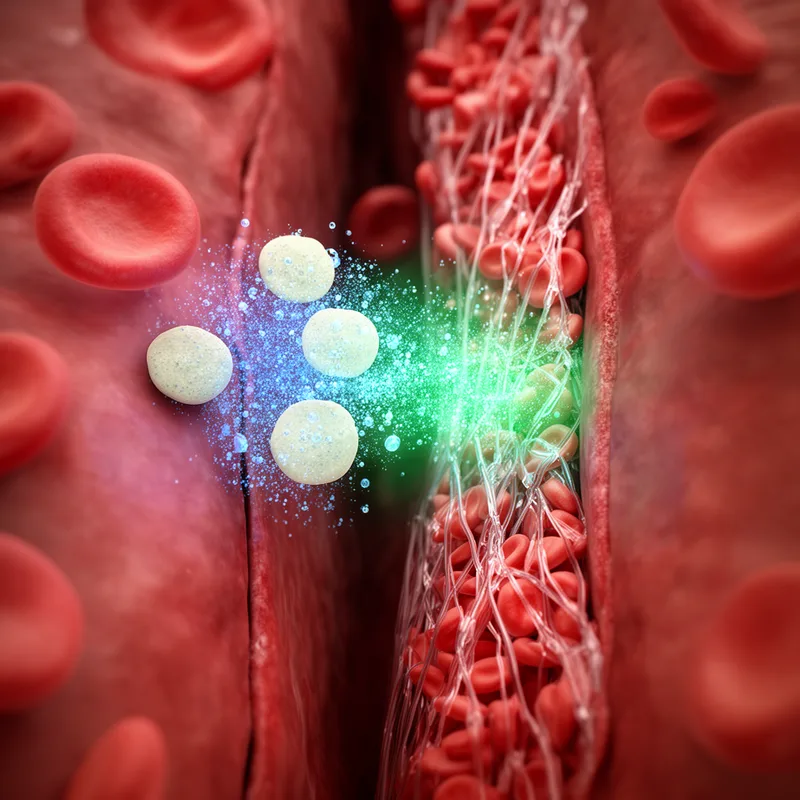
thrombokinase
- noun
- /θrɒmboʊˈkaɪneɪs/
- Specialized
- Thrombokinase is essential in the conversion of prothrombin to thrombin during blood clotting.
Examples
-
A deficiency in thrombokinase can lead to impaired coagulation and excessive bleeding.
-
Researchers studied the effect of various drugs on the activity of thrombokinase in platelets.
-
The body produces thrombokinase to aid in clot formation.
-
Doctors study thrombokinases to understand clotting disorders.
-
Thrombokinase plays a critical role in converting prothrombin into thrombin, which is necessary for blood clotting.
-
During the clotting process, thrombokinase is released from platelets to help form a stable blood clot.
-
In patients with low levels of thrombokinase, the risk of excessive bleeding during surgery increases.
Synonyms
A protein released by blood platelets that starts blood clotting by making thrombin

A substance released by blood platelets that helps blood to clot
A group of proteins that helps blood form clots by changing prothrombin into thrombin
Surface Forms
Morphology
Etymology
Thrombokinase begins with thrombo- meaning 'clot' and ends with -kinase from a root meaning 'to move' or 'set in motion'. So thrombokinase is an enzyme that 'sets the clotting process in motion' by turning prothrombin into thrombin.

