

kinase
 7
8.4
7
8.4

- noun
- /ˈkaɪneɪs/
- Specialized
- Muscle damage itself may cause an elevation of creatine kinase or myoglobinuria.
- tyrosine kinase
- protein kinase
- creatine kinase
Loading YouTube…
Watch on YouTubeAnd pyruvate kinase is essentially a rate limiting step.
- And pyruvate kinase is essentially a rate limiting step.
- I was probably now recognized as the most important pro aging pathways, the Tor s s kinase pathway.
Examples
-
EphB4 is a receptor tyrosine kinase that is expressed on epithelial cells during fetal life.
Academic text (2003) -
Because the drug is dependent on viral kinase for its action, it is selective for virus-infected cells only.
Academic text (2005) -
So when you change that ratio, you activate a kinase called AMP kinase.
-
And pyruvate kinase is essentially a rate limiting step.
-
One approach focuses on identifying the kinase(s) activated by ACE that phosphorylate p47-PHOX.
Academic text (2018) -
The limb was monitored clinically for compartment syndrome and biochemically with daily creatinine kinase levels.
Academic text (2015) -
In cardiomyocytes, TGF- can activate the PI3 kinase/AKT pathway 135.
Academic text (2016) -
Stimulation and inhibition of adenosine A1 receptor regulate the expression of protein kinase C.
Academic text (2018) -
The largest subfamily of receptor tyrosine kinases is the Eph family, which has 14 fully sequenced members.
Academic text (2003) -
AMP kinase is a crucial kinase that plays a vital role in regulating energy metabolism.
Synonyms

An enzyme that adds phosphate to other molecules to help cells use energy
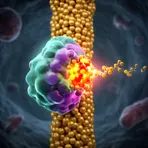
A protein that adds a phosphate to another chemical to help break down stored sugar in cells
Compounds

- Specialized
A drug that stops proteins that make cancer cells grow, used to treat some cancers
Surface Forms
Morphology
kinase = kin + ase
The suffix '-ase' denotes an enzyme in scientific vocabulary, but the root 'kin' here is a specialized combining form (not the common English word 'kin'), so an average B1 learner cannot derive the meaning from everyday vocabulary.
Etymology
Kinase comes from the Greek verb kinein, meaning 'to move', combined with the enzyme ending -ase. So a kinase is an enzyme that 'moves' a phosphate onto another molecule, which can turn that molecule on or off.