

factor III
- noun
- Specialized
- The factor III enzyme is essential for converting prothrombin to thrombin during clot formation.
Examples
-
During surgery, the presence of factor III is critical for proper blood clotting.
-
A deficiency in factor III can lead to problems with excessive bleeding.
-
Researchers are studying how factor III interacts with other proteins in the clotting cascade.
-
The factor III enzyme plays a crucial role in blood clotting.
-
Many patients lack sufficient factor III for proper coagulation.
-
A deficiency in factor III can lead to problems with excessive bleeding.
-
During surgery, the presence of factor III is critical for proper blood clotting.
Synonyms

A substance from tiny blood cells that helps blood form a clot

A substance released by blood platelets that helps blood to clot
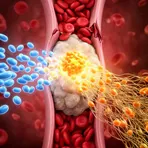
A group of proteins that helps blood form clots by changing prothrombin into thrombin
Surface Forms
Morphology
While 'factor' + 'III' transparently signals a label meaning 'third factor', the specific content — that this is a particular enzyme released from platelets initiating prothrombin-to-thrombin conversion in clotting — is specialist biomedical knowledge not derivable from the constituents. A B1 learner who knows 'factor' and the numeral 'III' would not be able to infer the enzyme identity or its clotting function, so the expression is effectively idiomatic/specialized for such learners.
Etymology
Factor III comes from old lab lists where scientists numbered the helpers for blood clotting: factor means a helper and III is the number three. This protein, often called 'tissue factor', is released when tissue or platelets are damaged and it starts the chain that makes blood clot, so the name helps you remember that it begins the clotting process.

