

prima facie
 9
9.5
9
9.5

- adjective
- /ˈpraɪmə ˈfeɪʃi/
- Jargon
- At first glance, the findings appear to be prima facie reliable.
- prima facie evidence
- prima facie case
- prima facie jurisdiction
Loading YouTube…
Watch on YouTubeLike it doesn't seem to be like prima facie impossible because you'd have to be I feel like, right?
- Like it doesn't seem to be like prima facie impossible because you'd have to be I feel like, right?
Examples
-
My dear, there's no doubt in my mind that we have here an absolutely clear-cut prima facie open-and-shut case.
-
I think he would win because there's prima facie evidence of malicious intent.
Blog text (23) -
At least prima facie, that seems pretty weird.
-
And this prima facie looks like it's a problem.
-
The video you have just seen is prima facie evidence that the defendant is guilty as charged.
-
Its absence would be considered prima facie evidence of a lack of seriousness.
Academic text (1998) -
First, respect for Mrs. Chu's dignity and position in the family is a prima facie ethical imperative.
Academic text (1998) -
As one scholar has written, "under Singapore law, accusing the judiciary of compliance is, prima facie, contempt of court."
Academic text (2003) -
Theses A and B seem prima facie to be mutually contradictory.
Academic text (1998) -
The semantic contrast of covering and uncovering is prima facie evidence of a marked divergence of the two functions.
Academic text (1997)
Synonyms
 253
3.7
253
3.7
It looks true from what you see, but may not be
 78
3.3
78
3.3
When you first see something and notice or feel something right away
 32
3.5
32
3.5
You notice something before you look more closely
 31
7.3
31
7.3
Likely to be true because of evidence, not certain
 21
5.3
21
5.3
Judging something only by what you first see without checking hidden facts
 12
5.5
12
5.5
Something looks true at first but may not be
 3
6.8
3
6.8
When you first look at something, it seems right before you check details
 1
6.6
1
6.6
An early opinion before careful thought


 1
4.8
1
4.8
Likely to be true based on the facts
Surface Forms
Morphology
prima + facie
This is a fixed Latin legal/loan phrase whose parts ('prima', 'facie') are not productive English words for a B1 learner, so the meaning 'at first sight' cannot be derived from the constituents. Even though the phrase appears across languages in formal contexts, its meaning is idiomatic and learned as a unit rather than compositionally transparent to learners.
Etymology
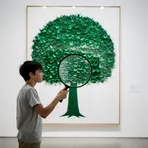
Prima facie comes from Latin words prima, meaning 'first', and facie, meaning 'face' or 'appearance', so it gives the image of judging something by its first look. That's why it now means 'based on first impression' or 'at first sight' before you check more closely.