

prairie wagon
- noun
- /ˈprɛəri ˈwæɡən/
- US
- Children peeked out from beneath the canvas of their family’s prairie wagon as it rolled along the trail.
Examples
-
The prairie wagon was packed with supplies for the long journey westward.
-
The prairie wagon creaked as it rolled over the uneven ground.
-
A group of settlers traveled for weeks in a prairie wagon across the plains.
-
Many prairie wagons were used during the westward expansion.
-
Pioneers relied on the prairie wagon to transport their belongings across the vast plains.
-
The family packed their prairie wagon with supplies for the long journey ahead.
-
During the trek, they often stopped to rest by the prairie wagon, which provided shelter from the elements.
Synonyms
 88
1.0
88
1.0

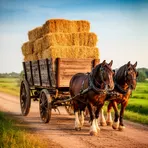
A four-wheeled vehicle pulled by animals or a tractor to carry goods
 5
5.6
5
5.6
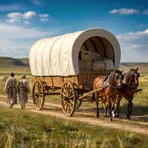
A large wooden wagon with a curved cloth cover used by people to travel across open land


 1
9.9
1
9.9
A large covered wagon with broad wheels used by 1800s American pioneers to carry goods

A large covered wagon with wide wheels that early American pioneers used to cross the plains

A large covered wagon used by early settlers to travel across the prairies
Surface Forms
Morphology
The meaning is directly and transparently built from 'prairie' (treeless grassland) + 'waggon/wagon' (large cart), so a B1 learner who knows both words will infer it refers to a wagon used on the prairie. The noun–noun compounding is a productive, cross-linguistically common pattern; historical specifics like a canvas cover are additional details but do not block comprehension.
Etymology
Prairie wagon comes from 1800s American settlers. It names a large wooden wagon with a curved canvas top that families used to travel across the wide grassland called the prairie, so the phrase now means 'a covered wagon used on long pioneer journeys'.