
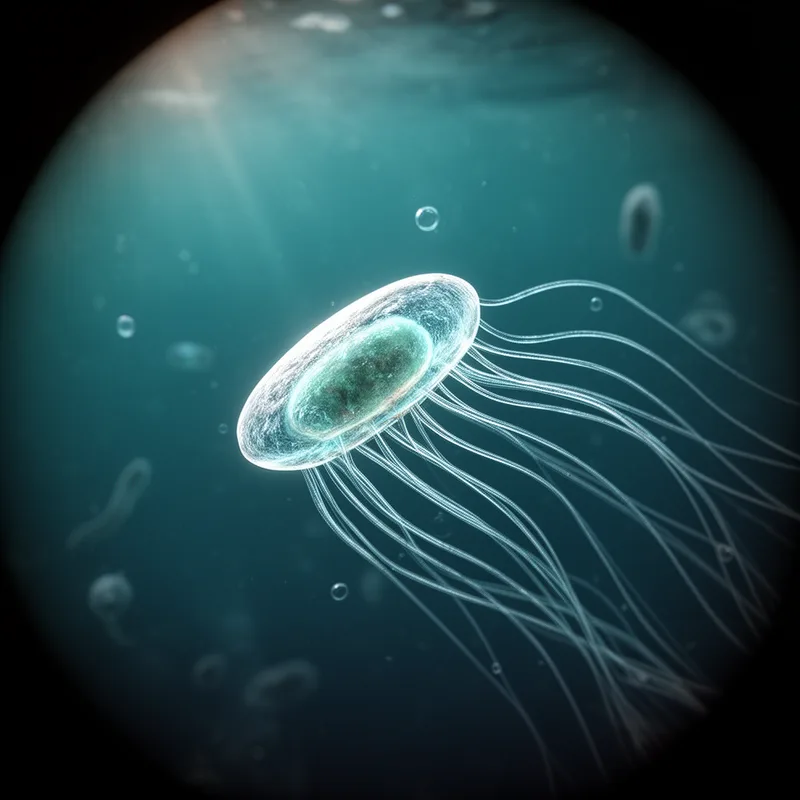
polymastigote
- noun
- /ˌpɒlɪˈmæstɪɡoʊt/
- Specialized
- The polymastigote is known for its multiple flagella.
Examples
-
The polymastigote moves rapidly thanks to its many flagella.
-
Many polymastigotes thrive in aquatic environments.
-
Researchers identified the organism as a polymastigote under the microscope.
-
Some polymastigotes are important in studying protozoan diversity.
-
Researchers identified the organism as a polymastigote under the microscope.
-
The polymastigote moves rapidly thanks to its many flagella.
-
Many polymastigotes thrive in aquatic environments.
Synonyms
 1
9.9
1
9.9

A tiny living thing made of one cell that moves with whip-like tails

A one-celled organism that moves with whip-like tails and can cause disease in animals or people
A single-cell creature that moves with tail-like parts and can cause disease in people

A single-celled organism that moves using whiplike tails and sometimes causes disease in people
A single-celled animal that has whip-like tails and can cause disease in people or animals
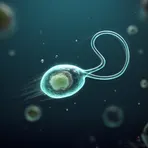
A cell with one or more long tails it uses to move
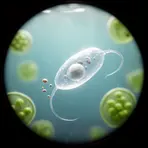
A tiny single-celled animal-like creature with a tail for movement that does not make its own food

A tiny single-celled animal-like creature that swims with a tail-like part and absorbs food

Relating to very small single cells that act like tiny animals
Surface Forms
Morphology
polymastigote = mastigote (opaque) = poly + mastigote
Although poly- clearly means 'many', the remaining technical stem is specialized and the full meaning is not readily recoverable for an average learner.
Etymology
Polymastigote joins poly- 'many', as in polygon, and mastig- 'whip', so imagine a tiny creature with many 'whip-like' tails. That's why a polymastigote is a protozoan that moves using many flagella.