

pine sawyer
- noun
- After examining the tree, she found the telltale holes left by pine sawyer larvae.
Examples
-
The wood from infested trees showed extensive tunneling by pine sawyers.
-
The forest service warned of an infestation of pine sawyers damaging the local pine stands.
-
The pine sawyer is known for damaging pine trees.
-
Have you seen a pine sawyer recently?
-
The forest service warned of an infestation of pine sawyers damaging the local pine stands.
-
After examining the tree, she found the telltale holes left by pine sawyer larvae.
-
The wood from infested trees showed extensive tunneling by pine sawyers.
Synonyms

 3
8.1
3
8.1

An insect or larva that makes holes in wood and damages trees
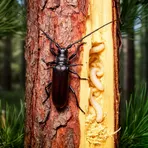
A large longhorn beetle whose young tunnel into pine trees
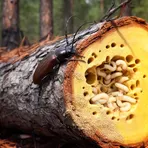
A large beetle whose young make holes in dead or dying pine trees

A beetle whose young make holes in dead or dying trees
Surface Forms
Morphology
The noun is directly compositional: 'pine' (the tree) + 'sawyer' (a longhorn beetle that tunnels conifers) yields a sawyer associated with pine trees, i.e. a beetle that damages pines. This follows productive English compounding, so a B1 learner who knows the given constituent meanings can infer the MWE meaning.
Etymology
The noun pine sawyer comes from the beetle's habit of making long holes in pine wood. People called it a sawyer, a word for someone who saws wood, because the beetle's young seem to 'saw' through the tree and leave long tunnels. That's why the name refers to a large beetle that damages pine trees.