
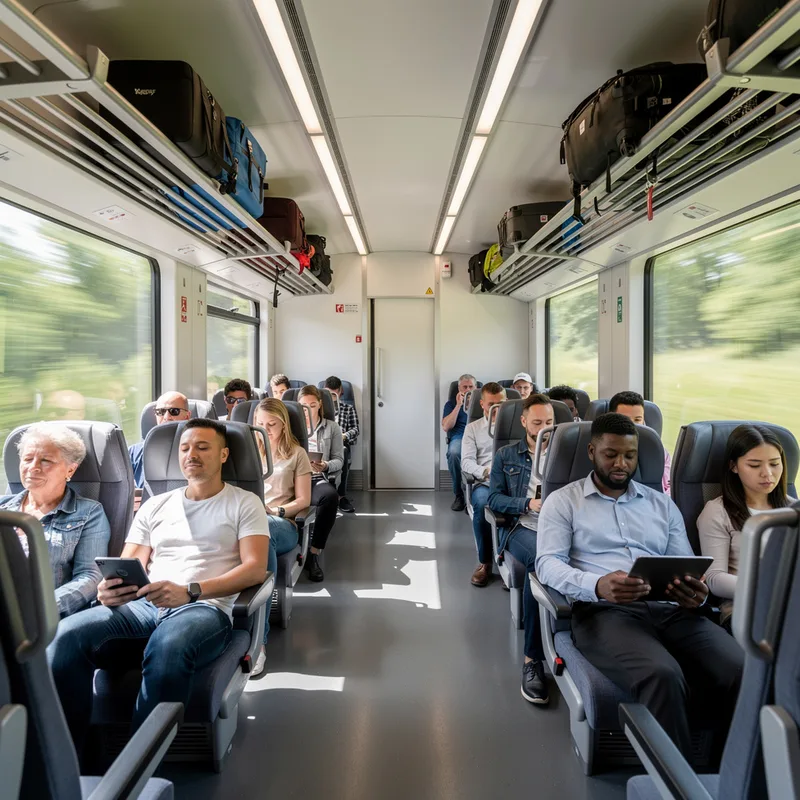
passenger car
 9
2.6
9
2.6

- noun
- /ˈpæsɪndʒər kɑr/
- US
- And by 1984, the Chevette was the most popular passenger car sold in America.
- passenger car tire
- passenger car shuttle
- passenger car standards
Examples
-
A paved road bisects the forest, so ordinary passenger cars and public buses can easily reach the project reception center.
Academic text (1996) -
Beginning at 18 MPG in 1978, the passenger car standards increased to 27.5 MPG by 1985.
Academic text (1990) -
Are you certain you were in the passenger car?
-
The future will see electric passenger cars on the roads in increasing numbers.
Academic text (1997) -
I mean, they took everything else, but mine's in my bag in the passenger car.
-
We pull back to see young Barris, in a suit, reading the paper in a passenger car of a moving train.
Fiction book (2002) -
Passenger cars were stopped.
-
In Connecticut, transportation produces 43% of greenhouse gas emissions, with single passenger cars producing the largest share.
Blog text (24) -
Also, during its inaugural year, the passenger-car shuttle is expected to transport 12.8 million passengers.
Academic text (1993) -
After taking a scenic train ride, we settled into a comfortable passenger car for the rest of our journey.
Synonyms
 130
5.7
130
5.7
A vehicle on tracks that carries passengers or goods
 75
1.3
75
1.3
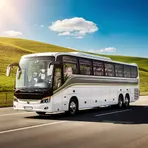
A large comfortable vehicle like a bus or long train carriage
 15
3.0
15
3.0
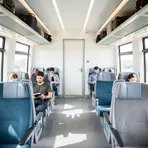
A part of a train that carries passengers
 6
2.5
6
2.5
A vehicle on railway tracks that carries people or goods
 6
3.0
6
3.0
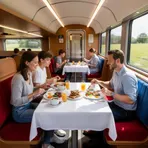
A part of a train where passengers eat meals during a journey
 5
3.7
5
3.7
A vehicle that runs on railway tracks to carry people or goods
 4
4.4
4
4.4
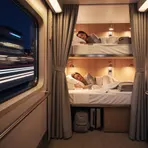
A train car with beds for sleeping on overnight trips
 3
4.9
3
4.9
A train carriage with a bar and seats for people to relax and talk
 2
4.4
2
4.4
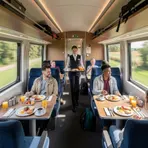
A passenger train car where people eat meals while the train moves
 2
3.8
2
3.8
A vehicle that runs on tracks in city streets using electricity
 1
2.3
1
2.3
A vehicle that runs on tracks and carries people or goods
 1
3.1
1
3.1
A train car with beds for passengers on overnight journeys
 1
5.5
1
5.5
A train car with seats, a bar, and tables for passengers to relax and talk

 1
7.5
1
7.5
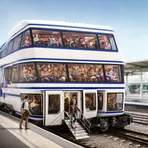
A very large passenger train car with two levels for carrying people
 1
3.4
1
3.4
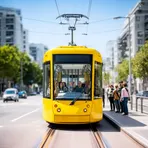
An electric car that runs on city tracks to carry people

A train car with two levels of seats to carry more passengers
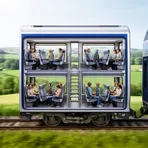
A passenger train car with seats on two levels to carry more people
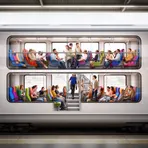
A train carriage with two levels of seats to carry more people

A very comfortable train car with individual seats that costs extra

A train car that has comfortable separate seats and costs extra
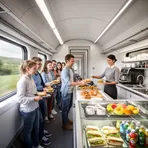
A part of a train where people can buy food and drinks
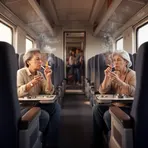
A train car where people may light cigarettes
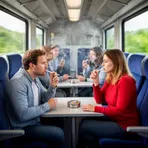
A train car where people are allowed to smoke

A train car where people may not smoke
How Big

Surface Forms
Morphology
The noun phrase 'passenger car' is directly compositional from 'passenger' (a person traveling) + 'car' (a rail vehicle), denoting a car intended for carrying passengers. This straightforward noun+noun combination follows common compounding patterns and is cross-linguistically transparent, so a B1 learner who knows both constituents can infer the meaning.
Etymology
Passenger car comes from trains made of many cars. The parts made to carry people were called passenger cars because passenger means a person who travels and car means one part of a train, so the name means 'a car that carries people'.