

railway car
 1
2.3
1
2.3

- noun
- /ˈreɪlweɪ kɑr/
- UK
- The cargo was loaded securely onto the railway car for transport across the country.
- a private railway car
Loading YouTube…
Watch on YouTubeThere are railway cars going and on multiple levels even there, yes, right.
- There are railway cars going and on multiple levels even there, yes, right.
Examples
-
The passengers boarded the train and found their seats in the spacious railway car.
-
It's like an old abandoned railway car.
-
A cold chill traversed the railway car.
Fiction book (1993) -
Cows and calves marched straight off railway cars into the hide house.
Fiction book (1994) -
Father entered the railway car, reappeared in the inner corridor, and opened the window through which Mother and I passed him our suitcases.
Fiction book (1993) -
We enjoyed the beautiful scenery through the large windows of the vintage railway car.
Synonyms
 130
5.7
130
5.7
A vehicle on tracks that carries passengers or goods
 22
6.5
22
6.5
A train car with a roof and sliding side doors used to carry goods
 15
3.0
15
3.0
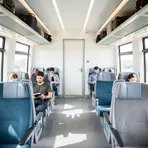
A part of a train that carries passengers
 9
2.6
9
2.6
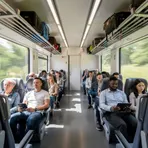
A part of a train that carries people
 6
2.5
6
2.5
A vehicle on railway tracks that carries people or goods
 5
3.7
5
3.7
A vehicle that runs on railway tracks to carry people or goods
 5
3.0
5
3.0
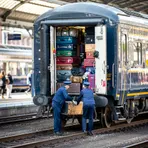
A train car that carries passengers' luggage
 4
3.2
4
3.2
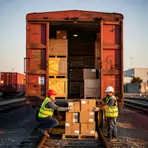
A vehicle on a train that carries goods like boxes or crates


 1
3.5
1
3.5
A train car without a roof that carries coal
 1
3.5
1
3.5
A train carriage where postal workers sort and carry mail while the train moves
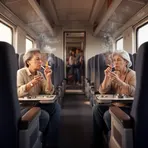
A train car where people may light cigarettes
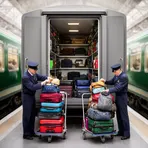
A train car that carries passengers' bags
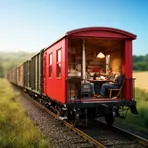
A car at the end of a freight train where the crew rest
Surface Forms
Morphology
The meaning is directly compositional: 'railway' (tracks) modifies 'car' (vehicle) to denote a vehicle that runs on railway tracks, so a learner who knows both words can infer the combined meaning. This noun–noun/compound pattern is common across languages and in English, making the expression immediately understandable to B1 learners.
Etymology
The noun railway car comes from a simple picture: a railway car, literally a car that runs on metal rails. Long ago, road carts were put on tracks to move people and goods, so today railway car means a 'vehicle that runs on railway tracks' used to carry people or goods.