

bilevel car
- noun
- Specialized
 :
vagón bipiso
:
vagón bipiso
- The new commuter trains feature a bilevel car design, allowing more passengers to travel during rush hour.
Examples
-
Passengers enjoy the views from the upper deck of the bilevel car as the train passes through the countryside.
-
To accommodate the large crowds, the railway added a bilevel car to each of its busiest routes.
-
The new bilevel car can accommodate more passengers.
-
Many bilevel cars are used during peak travel times.
-
Passengers enjoy the views from the upper deck of the bilevel car as the train passes through the countryside.
-
The new commuter trains feature a bilevel car design, allowing more passengers to travel during rush hour.
-
To accommodate the large crowds, the railway added a bilevel car to each of its busiest routes.
Synonyms
 15
3.0
15
3.0

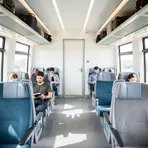
A part of a train that carries passengers
 9
2.6
9
2.6
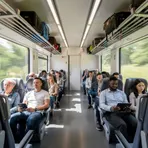
A part of a train that carries people
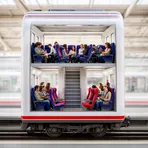
A passenger train car with two floors of seats

A train car with two levels for passengers to sit

A train car with two levels of seats to carry more passengers
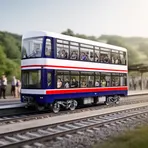
A train car with two levels of seats to carry more passengers

A train car with two levels of seats to carry more passengers
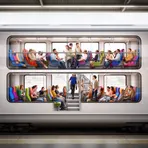
A train carriage with two levels of seats to carry more people
Surface Forms
Morphology
The meaning is transparently compositional: 'bilevel' means having two levels and 'car' refers to a railway vehicle, so a B1 learner who knows both constituents can infer a rail passenger car with seating on two decks. This formation parallels common, cross-linguistic patterns (e.g. 'double-decker car/bus'), making the MWE immediately understandable from its parts.
Etymology
Bilevel car comes from the simple image of a train car with two floors. One floor is the upper deck and the other is the lower deck, so it can hold more people — that's why it means 'a passenger car with two levels'.