
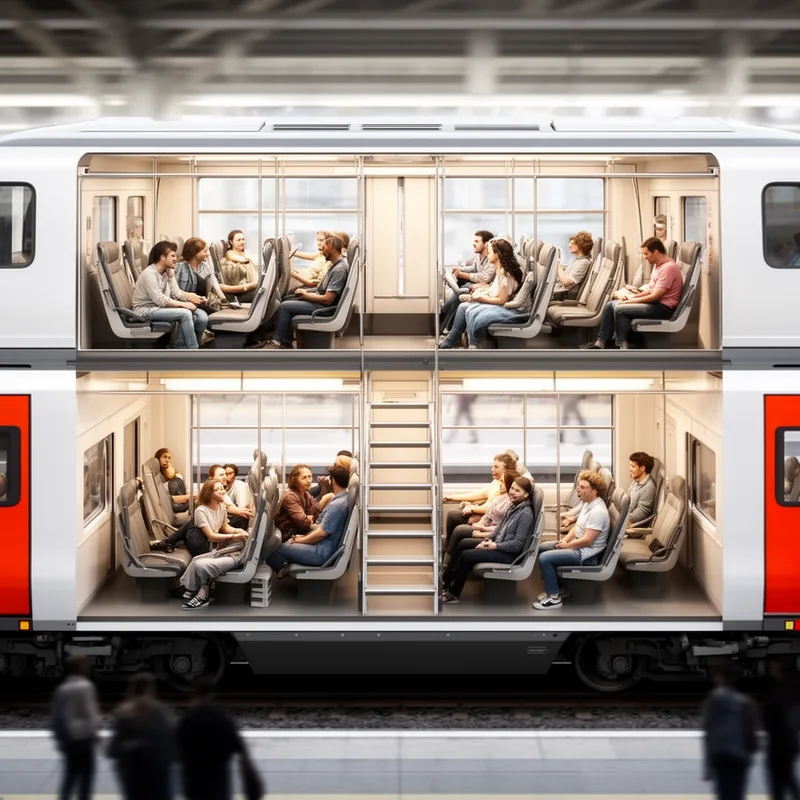
double-deck rail car
- noun
- /ˈdʌbəlˌdɛk reɪl kɑr/
- The commuter train used a double-deck rail car to accommodate more passengers during rush hour.
Examples
-
On busy routes, double-deck rail cars help reduce crowding while offering scenic views from the upper level.
-
Many cities now use double-deck rail cars for commuter services.
-
Engineers designed a new double-deck rail car for long-distance travel to improve comfort and seating capacity.
-
The new double-deck rail car can hold more passengers.
-
Engineers designed a new double-deck rail car for long-distance travel to improve comfort and seating capacity.
-
On busy routes, double-deck rail cars help reduce crowding while offering scenic views from the upper level.
-
The commuter train used a double-deck rail car to accommodate more passengers during rush hour.
Synonyms
A train car with two levels of seats to carry more passengers

A train car with two levels for passengers to sit
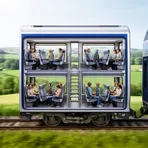
A passenger train car with seats on two levels to carry more people

A train car with two levels of seats to carry more passengers
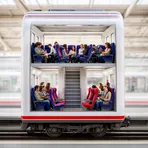
A passenger train car with two floors of seats
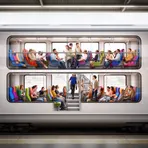
A train carriage with two levels of seats to carry more people
Surface Forms
Morphology
The phrase is fully compositional: 'double-deck' (= two levels) modifies 'rail car' (= a carriage for trains), so the overall meaning 'a train carriage with two levels' is directly derivable from the parts. This is a straightforward, cross-linguistically common construction (cf. 'double-decker') that a B1 learner who knows the constituent words would readily understand.
Etymology
The term double-deck rail car may come from the idea of a double-deck bus or 'double-decker' ship that has two floors. Picture a rail car with an extra level above the first; that image explains why it means a passenger car with two levels to carry more people.

