
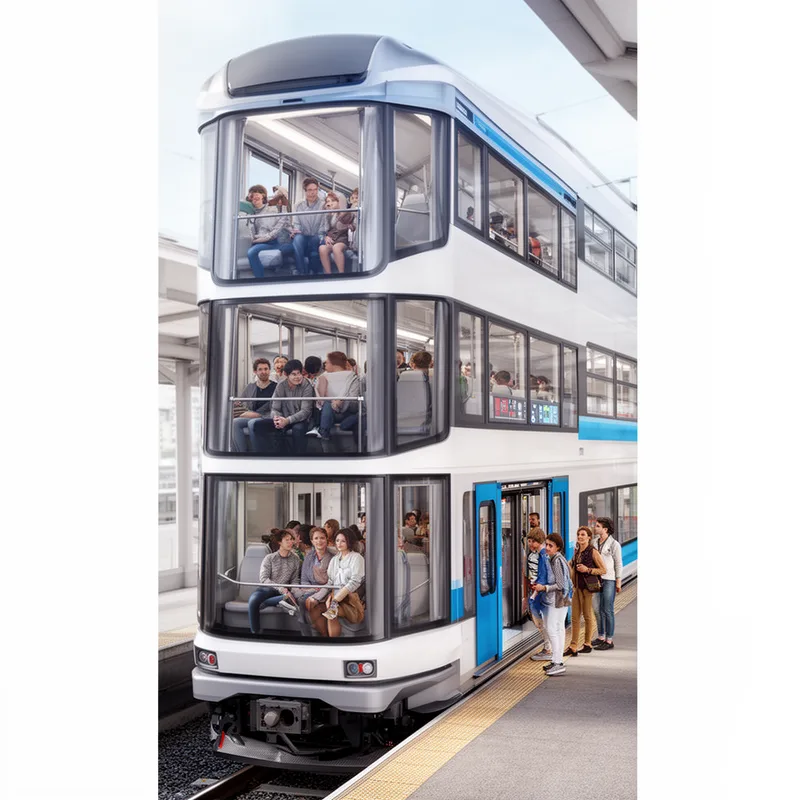
bilevel railcar
- noun
- /ˈbaɪˌlɛvəl ˈreɪlˌkɑr/
- Specialized
- Many commuter lines have switched to bilevel railcars to handle increased ridership without adding extra trains.
Examples
-
The new train features a bilevel railcar design, allowing more passengers to be seated comfortably during rush hour.
-
The new bilevel railcar can hold twice as many passengers.
-
From the platform, you could see the distinctive tall profile of the bilevel railcar as it pulled into the station.
-
Many bilevel railcars are now in service across the country.
-
Many commuter lines have switched to bilevel railcars to handle increased ridership without adding extra trains.
-
The new train features a bilevel railcar design, allowing more passengers to be seated comfortably during rush hour.
-
From the platform, you could see the distinctive tall profile of the bilevel railcar as it pulled into the station.
Synonyms
 9
2.6
9
2.6

A part of a train that carries people
 5
3.7
5
3.7
A vehicle that runs on railway tracks to carry people or goods

A train car with two levels of seats to carry more passengers
A train car with two levels of seats to carry more passengers
A passenger train car with seats on two levels to carry more people

A train car with two levels of seats to carry more passengers
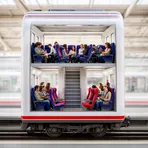
A passenger train car with two floors of seats
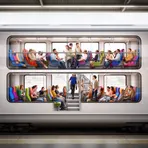
A train carriage with two levels of seats to carry more people
How Big
- US

 1
7.5
1
7.5

- Specialized
Surface Forms
Morphology
The meaning is directly compositional: 'bilevel' specifies 'two levels' and 'railcar' is a vehicle on tracks, so a B1 learner who knows both constituents can infer a rail vehicle with two passenger levels. This descriptive, literal compound follows standard English noun-modifier patterns and has clear cross-linguistic parallels (e.g., double-decker trains), making it readily understandable.
Etymology
The term bilevel railcar names a train car with two levels of seats. Imagine a tall car with stairs inside and windows on an upper floor, like a double-decker bus, so it can 'carry more people'.