

parsimonious
 2
9.9
2
9.9

- adjective
- /ˌpɑr.sɪˈmoʊ.ni.əs/
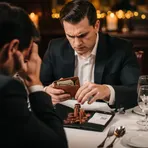
- Even during the holidays, she remained parsimonious, opting for homemade gifts instead of expensive store-bought ones.
- the most parsimonious
- parsimonious model
- a more parsimonious
Examples
-
Therefore, the four-trajectory model was chosen as the most parsimonious but informative description of the study data.
Academic text (2010) -
He is known for being parsimonious with his money, rarely spending on anything other than essentials.
-
And the most parsimonious solution we found was a four class solution.
-
Therefore, to be parsimonious, we did not include the interactions in the final model.
Academic text (2009) -
Our purpose was to identify a parsimonious list of attitudes that predict attrition.
Academic text (1995) -
Thus, the three scales can be used as a parsimonious descriptive base for temperament.
Academic text (1995) -
Pasquel was able to take particular advantage of teams with parsimonious owners, most notably the Dodgers.
Academic text (1994) -
Because of the New York Assembly's parsimonious attitude, Johnson often provided the Indians presents from his own storehouse.
Academic text (1993) -
The Copernican model was adopted because it was more parsimonious and provided more accurate predictions and explanations of celestial phenomena.
Academic text (1994) -
Another need in the research on kindergarten longitudinal reading outcomes is identifying a parsimonious set of predictors, especially phonological predictors.
Academic text (2015)
Synonyms
 199
6.5
199
6.5
Not willing to spend money even when needed
 31
4.9
31
4.9
Careful about spending money and not wasting things
 26
5.2
26
5.2
Not willing to spend money or give help to others
 10
4.4
10
4.4
Being careful with money and things to avoid wasting them
 3
7.9
3
7.9
Not willing to spend or give money even when they have enough
 1
8.0
1
8.0
A person who does not like to spend money
 1
7.5
1
7.5
Careful with small amounts of money but careless about larger costs


 1
9.9
1
9.9
Unwilling to spend money, even for small things

Being very unwilling to spend money

Not willing to spend money even when they have it

Not willing to spend money, even for small things

Not willing to spend or give money

Not willing to spend or share money

Unwilling to give money or things

Careful with small amounts of money and everyday spending
Antonyms


How Stingy

Surface Forms
Morphology
Etymology
Parsimonious comes from an old Latin word parsimonia, from the verb parcere meaning 'to spare', the same idea you see in the English word spare. So being parsimonious means you 'spare' money and try not to spend it, which is why it means very careful or stingy with money.