

ohmic resistance
- noun
- /ˈoʊmɪk rɪˈzɪstəns/
- Specialized
- The ohmic resistance of the wire increases as its length increases.
Examples
-
Copper has a low ohmic resistance compared to other metals.
-
Accurate measurement of ohmic resistance is essential for electrical circuit design.
-
The ohmic resistance of the wire is very low.
-
We need to measure the ohmic resistance for accurate results.
-
Accurate measurement of ohmic resistance is essential for electrical circuit design.
-
Copper has a low ohmic resistance compared to other metals.
-
The ohmic resistance of the wire increases as its length increases.
Synonyms
 46
4.4
46
4.4

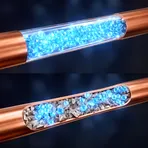
How much a material reduces electric current


 1
3.9
1
3.9
The amount a material stops or slows the flow of electric current

A measure of how much a wire or part stops electric current, shown in ohms
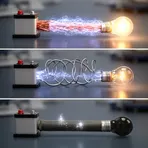
How much a material stops electric current from flowing
How Resistive
- Specialized

- Specialized
Surface Forms
Morphology
The noun phrase is a straightforward adjectival composition: 'ohmic' (pertaining to Ohm's law) modifies 'resistance', so the meaning is simply resistance that obeys Ohm's law. Although technical, this sense is fully predictable from the constituent meanings and follows a common adjective + noun pattern familiar across languages, so a learner who knows both words will understand it.
Etymology
Ohmic resistance comes from the scientist Georg Ohm, and ohmic says the material follows 'Ohm's law' while resistance is how much it slows electric current. Imagine a narrow pipe that slows water: the more it narrows, the more 'resistance' and the less flow, so ohmic resistance is the amount a material slows current and is measured in ohms.