

nucleoplasm
- noun
- /ˈnjuːklɪˌplæzəm/
- Specialized
- During cell division, parts of the nucleoplasm reorganize to help form the new nuclei.
Examples
-
The nucleoplasm supports the chromosomes and other nuclear components.
-
The nucleoplasm surrounds the chromosomes.
-
Proteins and enzymes move freely within the nucleoplasm to carry out vital cell functions.
-
In the nucleoplasm, the nucleolus is found.
-
In the cell's nucleus, the nucleoplasm suspended the chromosomes and the nucleolus, maintaining their structure.
-
The scientist observed how the proteins moved within the nucleoplasm during cell division.
-
Researchers studied the changes in the nucleoplasm to better understand gene expression.
Synonyms
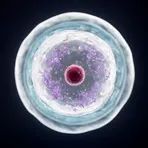
A clear fluid inside a cell's nucleus that holds parts like the nucleolus and chromatin
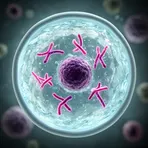
Jelly-like material inside the cell nucleus that holds the nucleolus and chromosomes
How Internal

Surface Forms
Morphology
Etymology
Nucleoplasm comes from two parts: nucleo-, from nucleus meaning 'center', and -plasm, the same root as plasma meaning 'substance' or 'fluid'. So nucleoplasm is the fluid substance inside the nucleus that holds and supports the chromosomes.

