

ectoplasm
- noun
- /ˈɛktəˌplæzəm/
- Specialized
- The scientist examined the ectoplasm under a microscope.
Examples
-
The ectoplasm of the amoeba is essential for its movement and shape.
-
The ectoplasm forms a protective barrier around the cell.
-
Scientists observed that the ectoplasm remains clear while the endoplasm contains granules.
-
Protozoa contain a jelly-like ectoplasm that supports cellular functions.
-
The scientist studied the ectoplasm under a microscope to understand its role in cellular processes.
-
In protozoa, ectoplasm plays a crucial role in maintaining cell shape and movement.
-
The researchers focused on the ectoplasm, noting its clear appearance and importance in cellular functions.
Synonyms
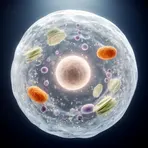
The clear part inside a cell where tiny parts float

A clear jelly inside a cell that holds its small parts
How Internal

Surface Forms
Morphology
Etymology
Ectoplasm comes from the Greek parts ecto- meaning 'outside' and plasma meaning 'something formed' or 'substance' (the same plasma you see in 'blood plasma'), so in biology it names the clear outer layer of a cell — the 'outside substance' that helps give the cell its shape.

