

ground substance
- noun
- /ɡraʊnd ˈsʌbstəns/
- Specialized
- The ground substance in the cytoplasm helps maintain the cell's internal environment.
Examples
-
Changes in the composition of ground substance can affect cell function and structure.
-
In the lab, researchers studied the ground substance to understand its role in cellular activities.
-
Microscopic analysis revealed that the ground substance was abundant in the tissue sample.
-
The ground substance is vital.
-
Look at the ground substance!
-
The ground substance in connective tissue provides support and binds cells together.
-
During the examination, the scientist noted that the ground substance contained essential nutrients for cell survival.
Synonyms
 1
8.0
1
8.0

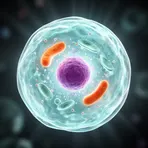
The liquid inside a cell where small cell parts float
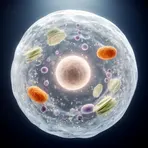
The clear part inside a cell where tiny parts float
Surface Forms
Morphology
Although the phrase combines 'ground' and 'substance', the everyday senses of 'ground' (soil, earth) and 'substance' (material) do not transparently yield the specialized biological sense of a clear, non-granular matrix in the cytoplasm. This is a domain-specific technical term whose meaning requires subject knowledge rather than simple composition, so a B1 learner who only knows the constituents would likely misinterpret it.
Etymology
Ground substance uses the same image: ground as the 'base' and substance as the 'material', like a clear jelly that holds small parts. That's why ground substance refers to the clear, jelly-like material in the cell where other parts float.