
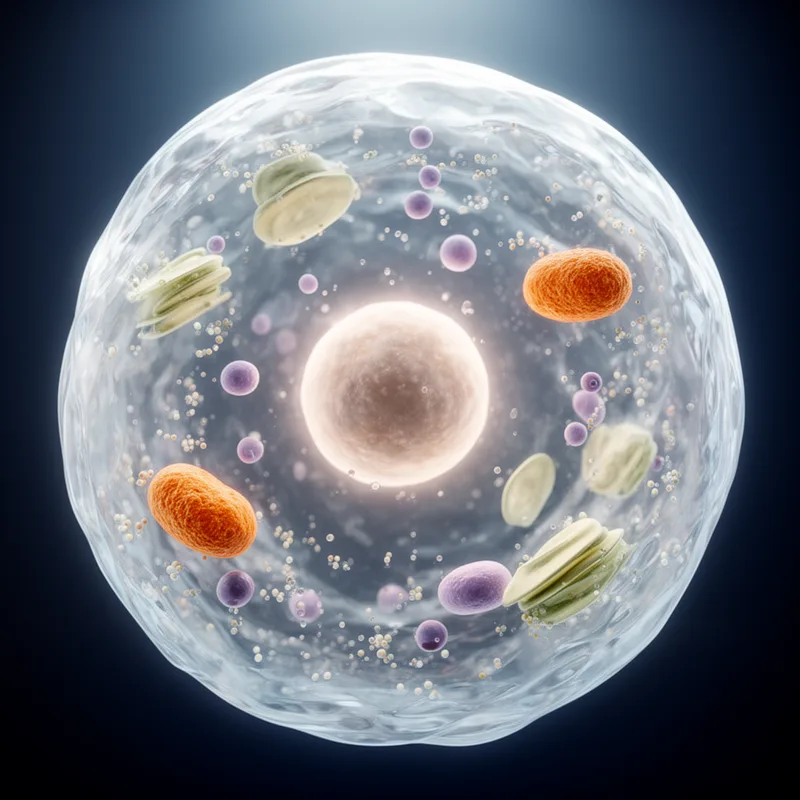
hyaloplasm
- noun
- /ˈhaɪəˌplæzəm/
- Specialized
- The organelles float freely in the hyaloplasm of the cell.
- hyaloplasm spreads
Examples
-
Staining techniques can help distinguish the hyaloplasm from granulated cytoplasmic areas.
-
The hyaloplasm is essential for cellular function.
-
Research shows that metabolic reactions occur within the hyaloplasm.
-
Cells contain hyaloplasm where organelles float.
-
The organelles float freely in the hyaloplasm of the cell.
-
Staining techniques can help distinguish the hyaloplasm from granulated cytoplasmic areas.
-
Research shows that metabolic reactions occur within the hyaloplasm.
Synonyms
 1
8.0
1
8.0

The liquid inside a cell where small cell parts float

A clear jelly inside a cell that holds its small parts
Surface Forms
Morphology
Etymology
Hyaloplasm comes from the Greek parts hyalo- meaning 'glass' and -plasm meaning 'something formed', and is like plasma, a clear liquid. So hyaloplasm is the clear, glass-like part of a cell where tiny cell parts float.