
mesocarnivore
- noun
- /ˌmɛzoʊˈkɑrnɪˌvɔr/
- Specialized
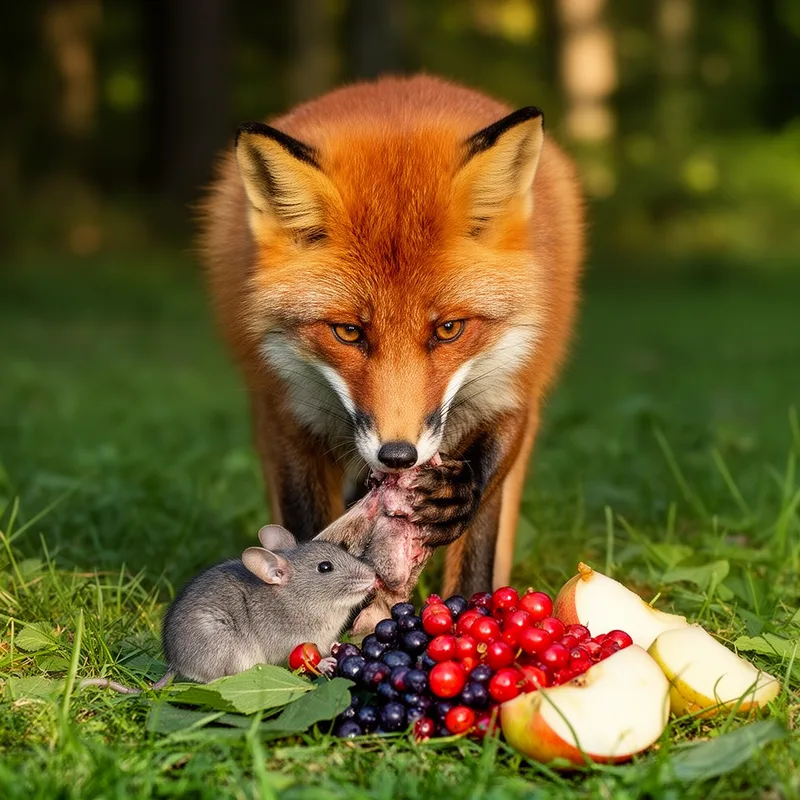
- As mesocarnivores like foxes hunt smaller animals, they also forage for fruits and vegetables in their environment.
- mesocarnivores and large carnivores
- ecological role of mesocarnivores
- mesocarnivores are important
Examples
-
In particular, we emphasize the need to study the trophic penetrance of mesocarnivores and examine how ecological context modulates their functional role.
Academic text (2009) -
Many species, such as raccoons and coyotes, are classified as mesocarnivores because their diet consists of both meat and plants.
-
Alternatively, if the released mesocarnivore is more frugivorous, its impact may be felt directly by the plant community.
Academic text (2009) -
The available theoretical and empirical data suggest that in many cases, mesocarnivores may be fundamentally important drivers of ecosystem function, structure, or dynamics.
Academic text (2009) -
Studies in northern Chile also show the need to consider a temporal component when assessing the ecological role of mesocarnivores.
Academic text (2009) -
In this article, we review the ecological role of the mesocarnivore and present examples where mesocarnivores drive community structure and function in roles similar to, or altogether different from, their larger brethren.
Academic text (2009) -
Because large carnivores cannot meet their energetic needs with the diet of a mesocarnivore, they are also unable to fill the unique ecological roles of some smaller carnivores.
Academic text (2009) -
Finally, we speculate on the potentially important but understudied ecological effects of mesocarnivores on plant dispersal and disease dynamics.
Academic text (2009) -
There are also instances in which mesocarnivores fill ecological roles, such as dispersers of seeds, that large, hypercarnivorous carnivores cannot.
Academic text (2009) -
In most cases, mesocarnivores are not the top, or apex, predators in an ecosystem, but there are instances, such as on islands or where mesocarnivores have been introduced, where they can fill the role of apex predator and perhaps cause community-level cascades.
Academic text (2009)
How Carnivorous


Surface Forms
Morphology
Etymology
Mesocarnivore comes from the parts meso- meaning 'middle' and carnivore meaning 'meat eater'. So a mesocarnivore is an animal that eats a 'middle' amount of meat—about half meat and half other foods.