
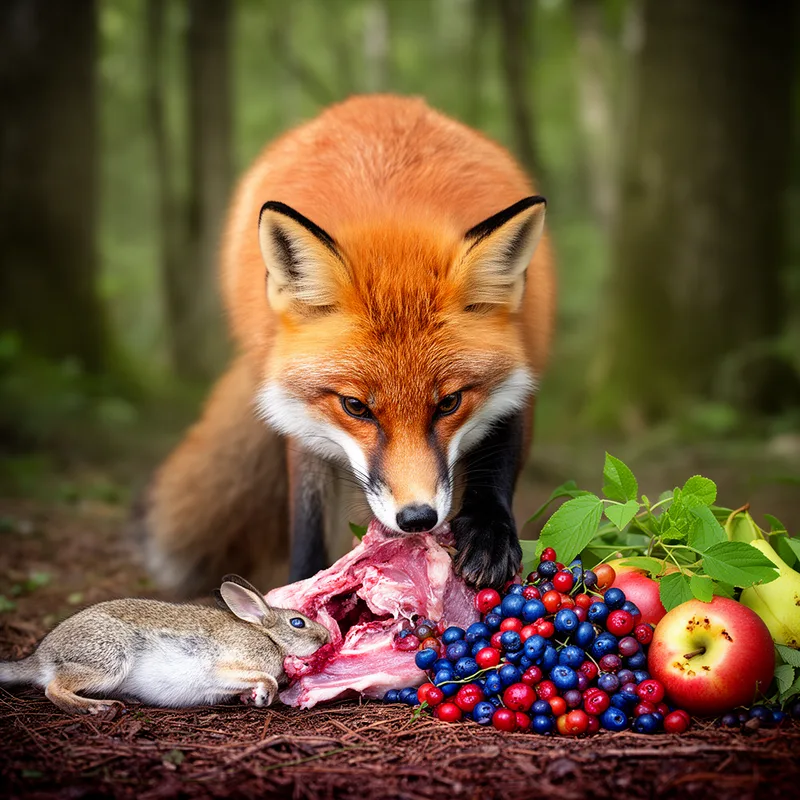
mesocarnivore
- adjective
- /ˌmɛzoʊˈkɑrnɪˌvɔr/
- Specialized
- The mesocarnivore diet includes both meat and vegetables.
Examples
-
Ecologists study how mesocarnivore species adapt to changes in food availability.
-
Understanding how mesocarnivore species meet their nutritional needs helps ecologists assess the health of various ecosystems.
-
The red fox is considered a mesocarnivore because it eats both meat and plant material.
-
Many wild canids are classified as mesocarnivore due to their balanced diets.
-
The mesocarnivore lifestyle can be healthy if balanced.
-
The red fox is classified as a mesocarnivore because its diet consists of approximately 60% meat and 40% plant matter.
-
Many species of wild canids, like wolves and coyotes, qualify as mesocarnivores since they consume a diet that includes both animal protein and vegetation.
Synonyms

 4
5.6
4
5.6

Able to eat both plants and animals

Animals that eat both plants and other animals
How Carnivorous

Surface Forms
Morphology
Etymology
Mesocarnivore as an adjective comes from meso- 'middle' and carnivore 'meat eater', so it describes animals or diets with a moderate amount of meat, often about 50–70% of their food.