
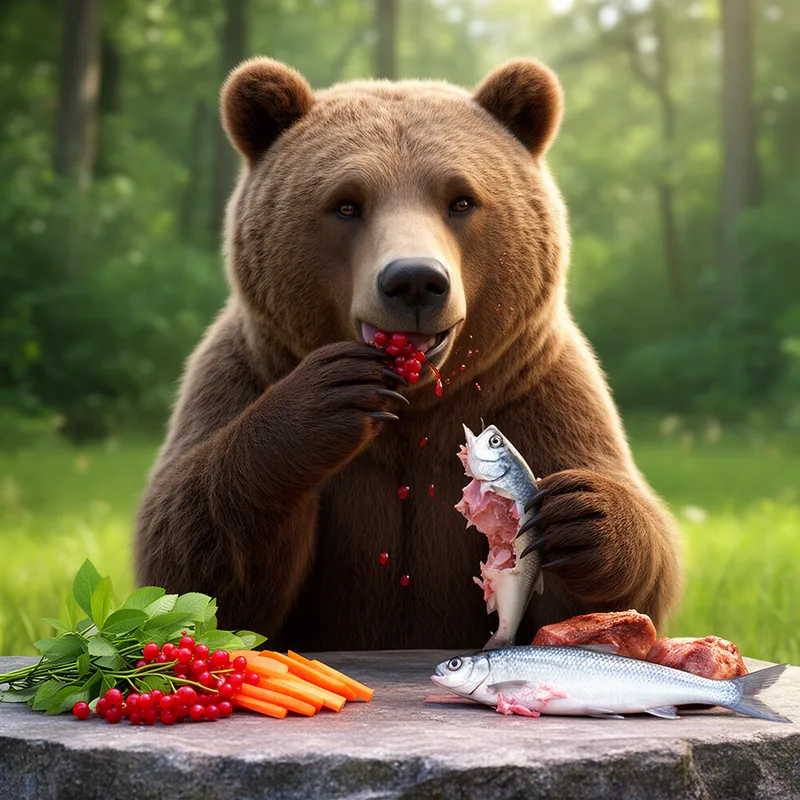
omnivorous
 4
5.6
4
5.6

- adjective
- /ɑmˈnɪvərəs/
- Human evolutionary development only began in earnest with the switch to an omnivorous diet.
Loading YouTube…
Watch on YouTubeWhat's so terrible about eating a moderate and healthy omnivorous diet?
- What's so terrible about eating a moderate and healthy omnivorous diet?
- And is iodine deficiency something that you're going to find more frequently on a plant based diet versus an omnivorous diet?
- So now we have completely plant against an omnivorous diet how most people in the sort of resistance training industry would eat.
Examples
-
The great gastronomic cultures are all in the omnivorous category: France, China, Italy.
Academic text (1990) -
Monkeys are omnivorous, and they eat fruit, lizards, nuts, insects, and small birds.
-
So I'm not here to argue about the cost of this diet as compared to an omnivorous one.
Blog text (6) -
I found it very easy as an omnivorous woman of childbearing age.
Blog text (15) -
Monkeys are omnivorous, and they eat fruit, lizards, nuts, insects and small birds.
-
Superb starlings are omnivorous throughout the year, but they need to feed their nestlings insects—primarily grasshoppers—during the breeding season.
Academic text (2009) -
The mottled lizard is a small, omnivorous reptile found only on three of California's Channel Islands.
-
Surprised scientists have identified the seagrass-munching bonnethead as the first omnivorous shark species.
Synonyms

Animals that eat both plants and other animals
Antonyms

Compounds

How Carnivorous

Surface Forms
Morphology
omnivorous = omnivore (semi-transparent) = omni + vor + ous
The prefix omni- is clear, but the root vor- is a bound Latin element that is not a productive English word, so the meaning is only partly recoverable from the parts.
Etymology
Omnivorous comes from the Latin parts omni- meaning 'all' and -vorous meaning 'to eat', so it literally says 'eating everything'. So an omnivorous animal eats both plants and other animals.