
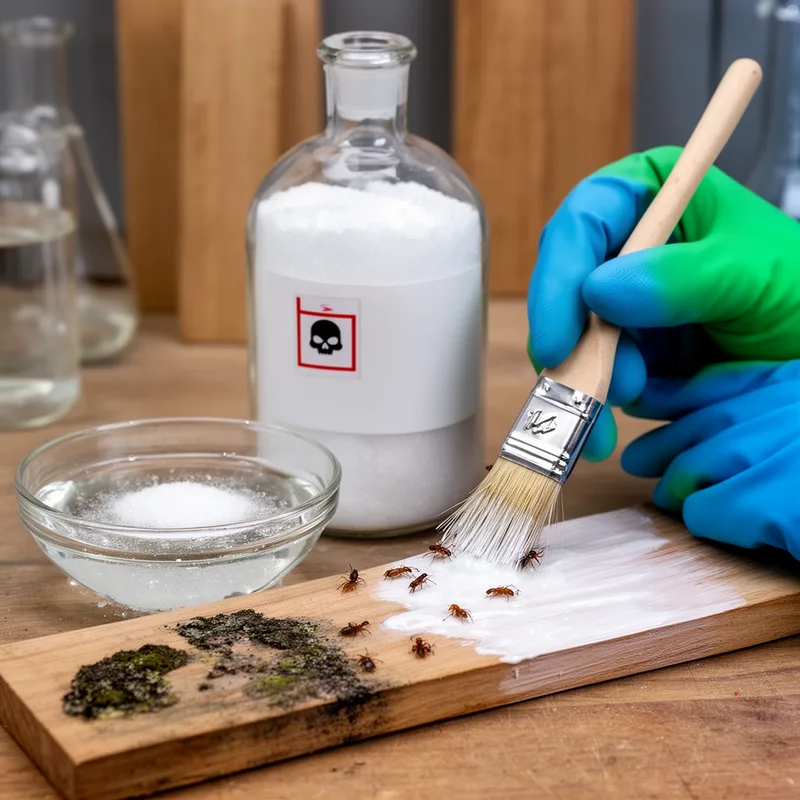
mercuric chloride
- noun
- /mɜrˈkjʊrɪk klɔrˈaɪd/
- Specialized
- Historically, mercuric chloride was often used as an antiseptic, despite its dangerous side effects.
Examples
-
Treating the wood with mercuric chloride prevented fungal growth but posed environmental risks.
-
The laboratory stored mercuric chloride in a locked cabinet because of its high toxicity.
-
The laboratory uses mercuric chloride for various experiments.
-
Is mercuric chloride safe to handle?
-
The laboratory stored mercuric chloride in a locked cabinet because of its high toxicity.
-
Historically, mercuric chloride was often used as an antiseptic, despite its dangerous side effects.
-
Treating the wood with mercuric chloride prevented fungal growth but posed environmental risks.
Synonyms

A poisonous white chemical once used to kill pests and preserve wood

A poisonous white chemical once used to kill pests, clean wounds, and protect wood
A white poisonous chemical once used to kill germs and protect wood
Surface Forms
Morphology
The phrase is compositionally built: 'mercuric' means related to mercury and 'chloride' denotes a chlorine-containing compound, so a learner who knows both constituents can infer it refers to a mercury–chlorine chemical compound. This follows regular chemical naming patterns (cross-linguistically common), so the core referent is immediately derivable even if specific properties (colour, toxicity, uses) are specialist details.
Etymology
The name mercuric chloride tells you what the substance is made of: mercuric means it contains the metal mercury and chloride shows it is combined with chlorine. So the name points to a white, very poisonous chemical that was often used as an antiseptic or to protect wood.

