

macrophage
 7
6.7
7
6.7

- noun
- /ˈmækroʊfeɪdʒ/
- Specialized
- The mannose receptor has been characterized in cultured macrophages, but little is known about its function in vivo.
- macrophages and neutrophils
- macrophage infiltration
- macrophage cells
Loading YouTube…
Watch on YouTubeThey become macrophages, and they eat that oxidized LDL molecule.
- They become macrophages, and they eat that oxidized LDL molecule.
- Mitochondria are sending the essential signals that change the state of the macrophages to induce these different phases of wound healing.
Examples
-
The immune system responds to this accumulation by sending some macrophages, some white, white blood cells here.
-
The study showed that macrophages play a key role in removing cellular debris from the bloodstream.
-
Both neutrophils and macrophages could be important for promoting muscle recovery after injury.
Academic text (2005) -
So here you can see macrophages that have been programmed with our technology, and they're fighting bacteria.
-
Experimental work in laboratory animals has suggested that alveolar macrophages are the first cells infected by M. tuberculosis.
Academic text (2000) -
Together, the activated macrophages, B lymphocytes, and antibodies form granulomas in the affected tissue.
Academic text (2003) -
Cells within the dermis include fibroblasts, macrophages, mast cells, and leukocytes.
Academic text (1995) -
Macrophages are essential for the immune system as they engulf and digest invading bacteria.
-
When a pathogen enters the body, macrophages quickly respond by engulfing the harmful microbes.
Synonyms
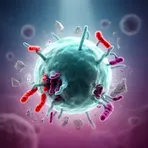

 1
8.1
1
8.1
A cell that eats and destroys bacteria and dead cells to help the body's immune system
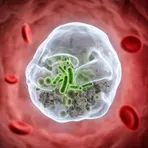 1
5.8
1
5.8
A tiny part of the body that eats dead tissue and germs to help fight infection
How Big

Surface Forms
Morphology
Etymology
The word macrophage comes from two Greek parts: macro- 'large' and -phage 'to eat'. So a macrophage is a 'large eater', a big white blood cell that eats and removes germs, dead cells and other debris.