
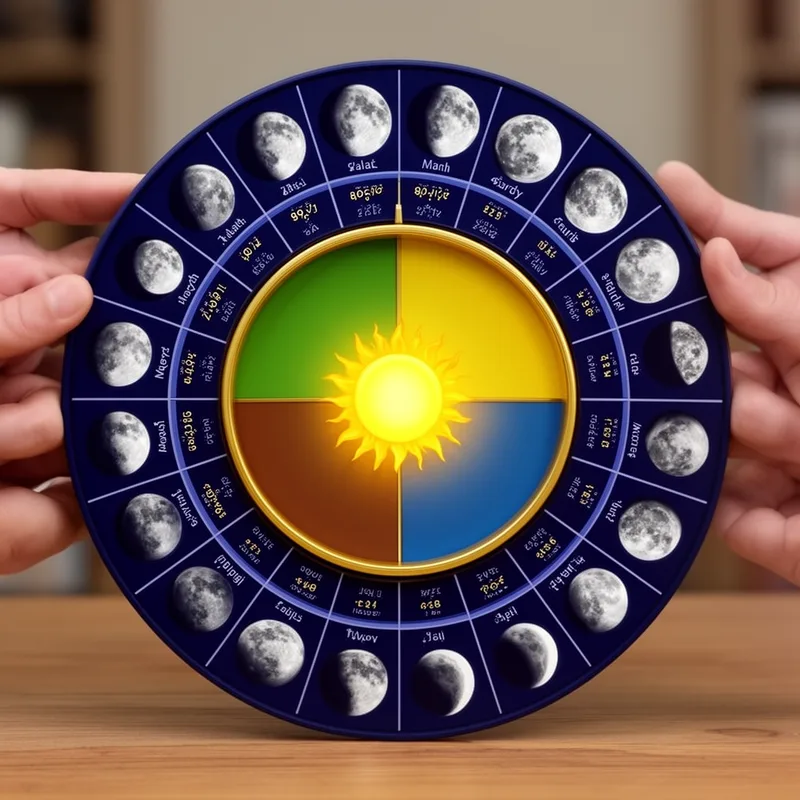
lunisolar calendar
- noun
- /ˈluːnɪˌsoʊlər ˈkælɪndər/
 :
calendario lunisolar
:
calendario lunisolar
- A lunisolar calendar uses months based on the moon and years adjusted to match the sun.
Examples
-
The Hebrew calendar is a well-known example of a lunisolar calendar.
-
Many ancient civilizations relied on a lunisolar calendar to organize their agricultural and religious activities.
-
The lunisolar calendar is used in many cultures.
-
Many Asian countries follow a lunisolar calendar.
-
A lunisolar calendar is designed to account for both the phases of the moon and the position of the sun.
-
Many ancient civilizations relied on a lunisolar calendar to time their festivals and planting seasons.
-
The Hebrew calendar is a popular example of a lunisolar calendar that combines lunar and solar cycles.
How Lunar


Surface Forms
Morphology
The meaning is directly derivable from combining 'lunisolar' (relating to both moon and sun) with 'calendar' (a system for organizing months/years); together they clearly denote a calendar based on lunar months and the solar year. This is a straightforward compositional pattern found across languages, so a learner who knows the constituents would understand the intended meaning.
Etymology
Lunisolar calendar comes from joining lunar and solar, where lunar means the moon and solar means the sun. The lunar part gives the 'months' by the moon's cycles and the solar part keeps the 'years' in step with the sun and the seasons, so the calendar matches both months and seasons.