
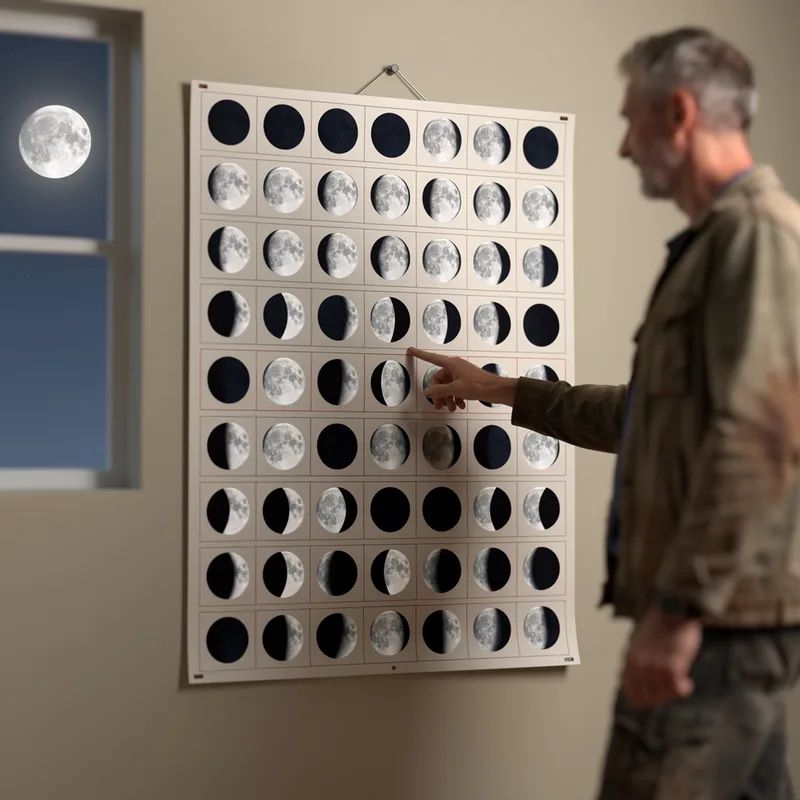
lunar calendar
 1
4.1
1
4.1

- noun
- /ˈluːnər ˈkælɪndər/
- Birthdays are celebrated in Dongyang according to the lunar calendar.
Examples
-
The dates of Ramadan follow a lunar calendar, and the start gets about 10 days earlier each year: for the next decade, Ramadan falls during the summer in the northern hemisphere when the hours between sunset and sunrise when eating and drinking is permitted may be as few as 4 or 5.
Academic text (2012) -
The lunar calendar determines the dates for various traditional holidays in several cultures.
-
Planting kind of depends on the lunar calendar.
-
The month is given in terms of the lunar calendar; the day in terms of a 60-day cycle.
Academic text (1996) -
November 7 was Li Dong, the start of winter according to the traditional Chinese lunar calendar.
Blog text (18) -
The Hebrew calendar is a lunar calendar, which means each year is 354 days long.
Blog text (9) -
In Buddhist Chinese belief, the dead are said to return to earth during the 7th month of the lunar calendar.
Blog text (22) -
However, because of the 11/12 day discrepancy between lunar and solar calendars, lunar calendars tend to get out of sync with the seasons.
Blog text (3) -
Many festivals, such as the Lantern Festival, are celebrated based on the lunar calendar.
-
Farmers often plan their planting seasons according to the lunar calendar.
How Lunar

Surface Forms
Morphology
The meaning is directly and compositionally derived from 'lunar' (relating to the moon) plus 'calendar' (a system for organizing months/years), so a learner who knows both constituents can infer it denotes a calendar based on the moon's cycles. This adjectival + noun combination is a common, cross-linguistic pattern, making the term immediately comprehensible to B1 learners.
Etymology
The noun lunar calendar comes from the simple idea of following the lunar cycle: people watched the moon and counted each new or full moon as a 'month', so their calendar moved with the moon. That's why 'lunar calendar' means a calendar where 'months' follow the moon.